
Living in Salmon River, Langley BC: The Honest 2026 Neighbourhood Guide
Living in Salmon River, Langley BC: The Honest 2026 Neighbourhood Guide
Salmon River is the Township of Langley's rural pocket between Highway 1 and Fraser Highway, and it's priced like acreage: the August 2026 FVREB detached benchmark was $1,856,900, 25.5% above Langley's $1,479,400. Most homes here run on a private well and a septic system, which changes what you check before you buy.
*MLS® HPI benchmark prices from the Fraser Valley Real Estate Board Stats Centre for the Salmon River area, August 2026, compared with August 2025, pulled 21 September 2026. Condo figures are FVREB's Apartment category. Salmon River is overwhelmingly a detached market, so read the townhome and condo lines with the caution set out below.
What Salmon River Actually Is
Salmon River is the rural heart of the Township of Langley, and it takes its name from the river that runs through it. The Township's own engineering work on the area, published as the Salmon River Uplands Engineering Services Plan, describes a rural area of roughly 7,800 people that sits mostly between Highway 1 and Fraser Highway, is predominantly rural residential in its land use, and is serviced by private wells and septic systems rather than municipal water and sewer. Portions of it sit inside the Agricultural Land Reserve, the provincial designation that protects farmland from being carved up for housing.
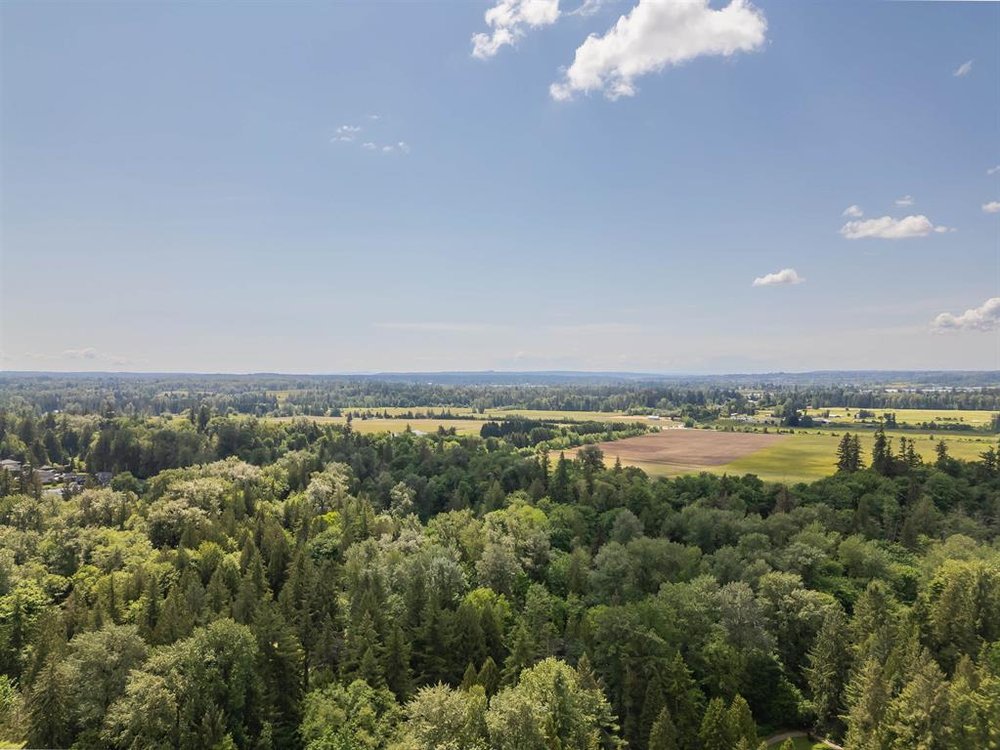
That description does more work than it looks like it does. It tells you the lots are large, because you can't put a well and a septic field on a small one. It tells you the streets won't have sidewalks and streetlights the way Willoughby's do, because servicing was never built out to that standard. And it tells you that what gets built next door is governed by the Township's Rural Plan and, on ALR land, by the province, not by a neighbourhood plan drawn up for new subdivisions.
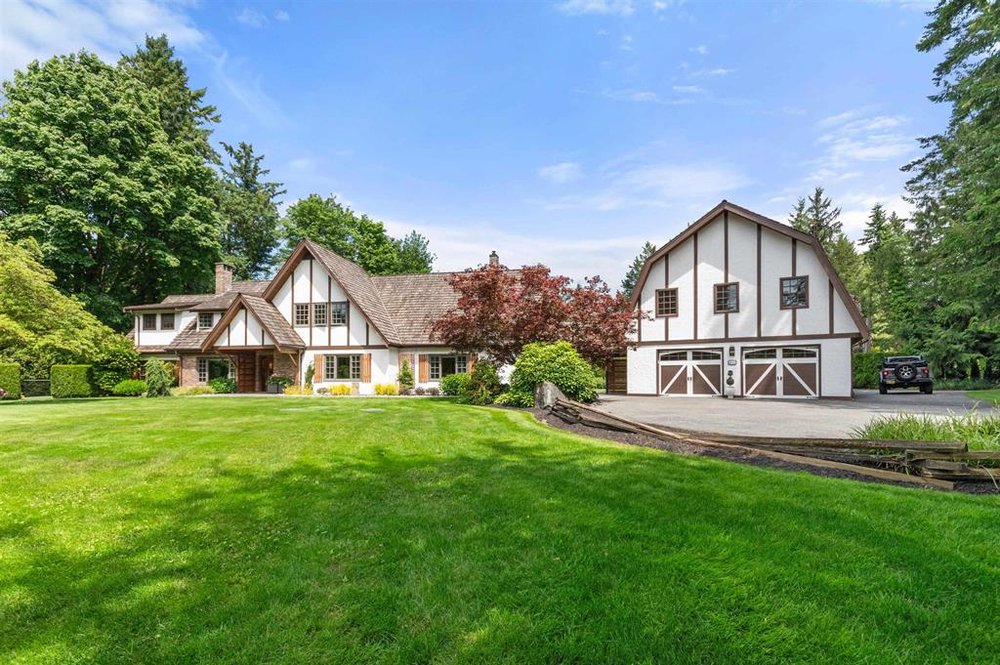
The way I'd frame Salmon River to a buyer is this: you are not buying a neighbourhood, you are buying a property. In Willoughby or Walnut Grove, a large part of what you're paying for is the neighbourhood itself, the schools and shops and parks that come with the address. Out here, the value sits in the land, the well, the septic system, the outbuildings, and what the zoning and the ALR will let you do with all of it. Two homes a kilometre apart can be completely different purchases, and the comparables are much less interchangeable than they are in a townhome complex.
Who Salmon River Is Best For
Salmon River suits you if space is the whole point. If you want room for horses, a workshop, a hobby farm, equipment, or simply distance from the next house, this is one of the few parts of Langley where that's still the normal thing rather than the exception. Buyers usually arrive here after looking at detached homes on standard lots and realising that what they actually want isn't a bigger house, it's land around it. The August 2026 detached benchmark of $1,856,900 is the price of that, and it sat $377,500 above the Langley-wide detached benchmark.
It also suits a buyer who is comfortable being their own utility company. A well and a septic system are assets you maintain, test, and eventually replace, and the people who are happiest here treat that as ordinary homeownership rather than a nasty surprise. If you've owned rural property before, none of this will faze you. If you haven't, it's learnable, but it's genuinely a different job from calling the city when the water pressure drops.
Here's who I'd steer elsewhere. If you want to walk to a grocery store, a coffee shop, or a school, Salmon River will frustrate you, and Murrayville or Fort Langley give you a village feel without the acreage commitment. If rapid transit matters, the Surrey-Langley SkyTrain doesn't come here and Willoughby is the better fit. And if your budget is the thing steering the search, Aldergrove buys you a detached home for well under half of the Salmon River benchmark.
Real Estate and Housing in Salmon River
The cleanest way to compare prices between areas is the MLS® Home Price Index benchmark. A benchmark price is the board's estimate of what a typical home of that type in that area would sell for, which makes it steadier than an average of whatever happened to trade that month. Here's how Salmon River lined up against FVREB's Langley area in August 2026, with each benchmark's movement over the previous year.
| Home Type | Salmon River* | Langley* | Salmon River vs Langley | Salmon River, 1 Year* |
|---|---|---|---|---|
| Detached | $1,856,900 | $1,479,400 | 25.5% higher | -5.2% |
| Townhome | $1,022,600 | $806,400 | 26.8% higher | -4.1% |
| Condo | $445,800 | $534,000 | 16.5% lower | -8.8% |
*MLS® HPI benchmark prices from the Fraser Valley Real Estate Board Stats Centre, August 2026, compared with August 2025, pulled 21 September 2026. Condo figures are FVREB's Apartment category.
The detached line is the one to take seriously, and it tells a calm story. Salmon River's benchmark was down 5.2% year over year while FVREB's Langley area was down 7.1%, so acreage held its value slightly better than Langley as a whole through a soft year. That's the pattern you'd expect from a segment where supply can't expand: nobody is building new acreage, and the ALR is a large part of why. Over a 5 to 10 year hold, that scarcity is the argument for the premium you're paying.
The townhome and condo lines need a caveat, and it's a big one. Salmon River is not a strata market in any meaningful sense, and those benchmarks come from a very small number of properties, which is why a Salmon River townhome benchmark can print higher than the Langley-wide figure. If you're shopping for attached housing, you're really shopping in Walnut Grove, Willoughby, or Brookswood, not here, and those areas' numbers are the ones worth reading.
How Fast Homes Are Selling
Price is only half the picture, so here's what FVREB's August 2026 activity figures showed for detached homes. The days figure is the point at which half of the homes that went under contract had done so. The sales-to-active ratio is sales divided by active listings, so a higher number means buyers are absorbing more of what's on the market. The last column is what sold homes averaged as a share of their list price.
| Detached, August 2026* | Days to Contract (Half of Sales) | Sales-to-Active Ratio | Average % of List Price |
|---|---|---|---|
| Salmon River | 9 | 18.2% | 96.2% |
| Langley | 23 | 16.6% | 95.0% |
*Fraser Valley Real Estate Board Stats Centre, August 2026: listing-to-contract days, sales-to-actives ratio, and average % of list price, for the Salmon River and Langley areas. Pulled 21 September 2026.
For detached homes, though, August 2026 was a comparatively brisk month. Half of the sales went under contract within 9 days against 23 across Langley, the sales-to-active ratio ran slightly ahead of the Langley figure, and sold homes averaged 96.2% of list price against 95.0%. That's not a frenzy, but it does say that well-priced acreage in Salmon River finds its buyer, and it's worth remembering that a single month in a small area moves a long way on a handful of sales. Read it alongside the 5.2% year-over-year benchmark decline rather than instead of it.
Wells, Septic, and the ALR: What Rural Actually Means
This is the section that matters most and the one buyers skip. In Salmon River, the things a city buyer never thinks about, where the water comes from and where the waste goes, are the two biggest variables in the purchase. Getting them wrong is expensive in a way that a bad paint colour or a dated kitchen never is, and the time to investigate them is before you remove subjects, not after.
The Well
Household water from a private well doesn't need a provincial licence. The Province exempts domestic groundwater use from both licensing and water rentals, which covers water used for household purposes in a private dwelling. Non-domestic uses such as irrigation or a commercial operation are a different matter and do require a licence, so if you're buying with a hobby farm or a business in mind, that distinction is worth pinning down early rather than assuming.
Registration is separate from licensing, and this is where a lot of buyers get confused. Any drilled water supply well constructed, altered, or decommissioned after 29 February 2016 must be registered in the Province's GWELLS database, which is publicly searchable. Before that date registration was voluntary, so plenty of older Salmon River wells have no record at all. Searching GWELLS for the address before you write an offer costs you nothing and occasionally tells you the depth, the driller, and the tested flow rate of the well you're about to depend on.
Water quality is the owner's responsibility, not the municipality's. The Province's guidance for well owners is to test periodically to confirm the water is safe to drink and to take water quality concerns to the local Health Authority. Most routine maintenance beyond the basics has to be done by a registered well driller under the Groundwater Protection Regulation. Practically, that means 2 things when you're buying: get the water tested during your subject period, and get a flow test, because a well that produces enough for 2 people in February may not produce enough for 5 people in August.
The Septic System
Onsite sewerage in Langley falls under BC's Sewerage System Regulation and is administered by Fraser Health. Only an Authorized Person, meaning a Professional Engineer or a Registered Onsite Wastewater Practitioner, can design, install, repair, maintain, or inspect one. Those professionals have to file a Record of Sewerage System with the health authority before construction or alteration, and file a letter of certification afterward. As the owner, you're required to maintain the system according to the maintenance plan the Authorized Person filed, and to keep a record of the maintenance you've had done.
That paper trail is the thing to chase during a subject period. Fraser Health accepts a Request for Sewerage System Information application, and it's worth submitting, though the health authority is upfront that it can't guarantee a file exists for a given property or that any diagram in it is accurate. Where the file is thin, an inspection by an Authorized Person is the only way to know what you're buying, and the cost of that inspection is trivial next to the cost of replacing a failed field. Ask the seller for maintenance records too, because a system with a documented history is worth more than an identical one without.
The Agricultural Land Reserve
Parts of Salmon River sit inside the Agricultural Land Reserve, a provincial designation that gives farming priority on the land it covers and tightly limits subdivision and non-farm use. For a buyer, the ALR mostly acts as a promise that the countryside around you stays countryside, which is a large part of why people pay the premium to be here. It also means that plans involving a second dwelling, a business, or splitting a parcel are governed by the province rather than by the Township alone, so nothing along those lines should be assumed from a listing description.
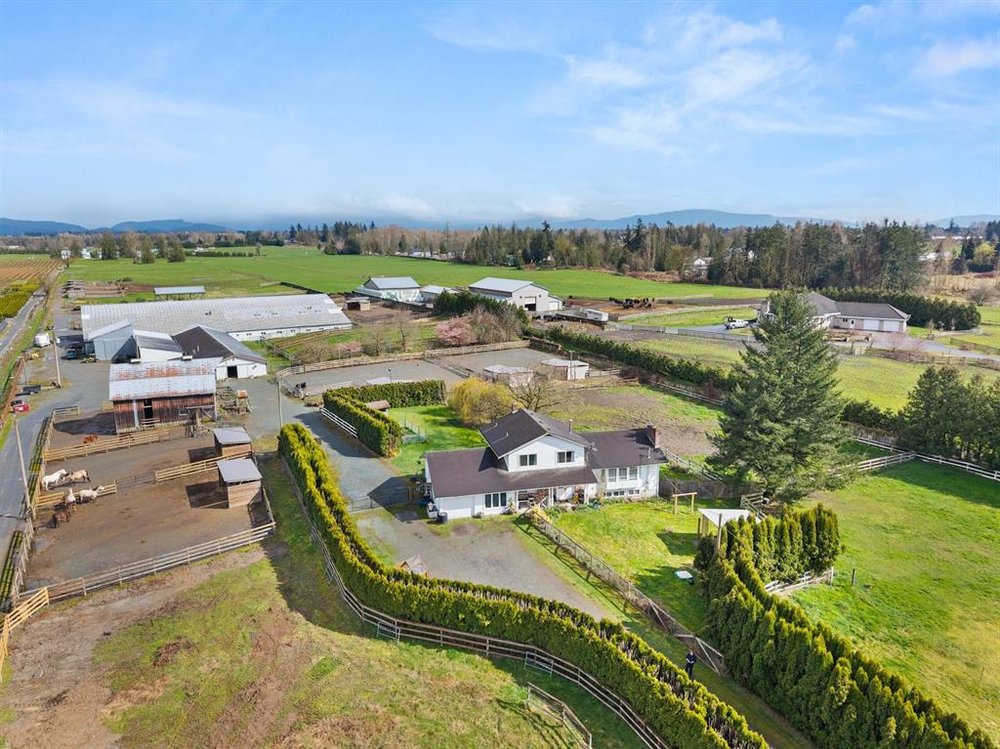
The Township has also signalled that the future of the wider Salmon River Uplands is an open question rather than a settled one. Its Salmon River Uplands Engineering Services Plan, published by the Township of Langley and checked here on 21 September 2026, models a land use scenario that could eventually support a population of 31,300, well above the roughly 7,800 the same document puts in the area today, while council has separately pressed for a review of the area before further subdivision proceeds. None of that changes what you can do with a property today, and I wouldn't buy on the strength of it. But it's the honest answer to the question of whether Salmon River will always look the way it looks now, and the answer is that nobody knows yet.
Thinking About Buying or Selling in Salmon River?
Acreage purchases turn on details that don't show up in a listing. Pick a time in the calendar and we'll walk through what to check on the property you're looking at.
Schools and Families in Salmon River
I'm not going to name a catchment school for Salmon River, and that's deliberate. The Langley School District doesn't publish a school named for this area, rural catchments cover a lot of ground, and the boundary that applies to one property can differ from the one that applies to a property a few minutes away. Naming a school here would be the kind of guess that costs a family real money when they find out it was wrong.
What I'd do instead is use the district's own tools, address by address. The Langley School District publishes catchment maps for its elementary, middle, and secondary schools, and a School Locator that resolves a specific civic address to its catchment schools. The district itself warns that proximity is not the only factor and that the locator is the most accurate source, which is as close to an instruction as a school district gets.
Two more things are worth knowing before you let schools decide between properties. Langley is a growing district, with roughly 26,800 students across 46 school sites and new schools in the pipeline, and new schools mean redrawn catchments. And a catchment is not a guaranteed seat when a school is over capacity. So confirm the catchment for the exact address, then confirm with the district that the school has room, and treat both answers as current rather than permanent.
The other family consideration out here is simply distance. There's no walking to school from most Salmon River addresses, which means either the bus or a daily drive, and for a family with children at 2 different schools that can quietly become an hour a day. It's not a reason to rule the area out, but it's a real part of the cost of living here and it's better to price it in before you buy than to discover it in September.
Commute and Getting Around
Salmon River is a car-first place, and there's no softening that. The area sits mostly between Highway 1 to the north and Fraser Highway to the south, which is genuinely useful positioning: you have 2 major routes, one for heading west toward Surrey and Vancouver and one for moving across Langley itself. Compared with the far eastern edge of the Township, you're closer to the middle of everything, and that's part of what the detached benchmark is paying for.
I haven't put drive times in this guide, on purpose. They swing so far by hour, day, and direction across this part of the Fraser Valley that a single number would mislead you more than it helped, and the honest version of that advice is more useful anyway: before you write an offer, drive your actual commute from the actual driveway, at the actual time you'd be leaving, on a weekday. Then do the return trip at 5pm. That hour of research is worth more than any figure I could put in a table.
On transit, the key fact is the Surrey-Langley SkyTrain, which extends the Expo Line along Fraser Highway from King George Station in Surrey to 203 Street in Langley City, with 8 new stations. None of them is in Salmon River, and given the density the line needs to justify a station, none is ever likely to be. The practical version for a Salmon River household is park-and-ride: the Langley City end of the line is a manageable drive, so the train becomes a realistic option for a downtown trip even though it will never be a doorstep one.
Lifestyle, Parks, and the Salmon River Itself
The centrepiece is Williams Park at 68 Avenue and 238 Street, which the Township classifies as a rural community space and which is open dawn to dusk. The Township lists trails, forest, a play area, picnic shelters, restrooms, drinking water, parking, and a watercourse running through it, that watercourse being the Salmon River. It's the sort of park you use on an ordinary Tuesday rather than drive to for a special occasion, and having it inside the community is one of the quiet arguments for living here.
The river is more than scenery. The Langley Environmental Partners Society describes the Salmon River as one of the most pristine rivers in Langley and its watershed as one of the largest, draining roughly 76.9km² and taking in Coghlan Creek, Davidson Creek, Otter Creek, and Union Creek. At least 13 species of fish live in that watershed, including the endangered Salish Sucker. If you want the single best argument for the area in one sentence, it's this one from LEPS: in November, walk the trails of Williams Park to see coho salmon spawning. That is a 10 minute walk from a lot of front doors out here.
Day-to-day shopping is the trade-off, and it's the honest weak point. There is no shopping district inside Salmon River in the way there's one in Murrayville or Fort Langley, so groceries, coffee, restaurants, and errands all mean a drive to a neighbouring part of Langley. For most people who choose this area, that's a price they're happy to pay for what they get at home, but it's worth being clear-eyed that the convenience you're giving up is daily and the space you're gaining is also daily. Both sides of that trade show up every week.
What you get in exchange is a rural rhythm that's genuinely rare this close to Vancouver. Dark skies, room for a dog to run without a leash law argument, space for a trailer or a workshop, and the kind of neighbours who notice when a gate is open. BC Rivers Day falls on the fourth Sunday of September, and the Township and LEPS have run events along the Salmon River in Williams Park to mark it, which is a fair snapshot of what community looks like here: outdoors, river-centred, and organised by the people who live nearby.
What Works and What Doesn't
What Works
- Acreage and large lots within easy reach of both Highway 1 and Fraser Highway.
- The ALR and rural servicing limit how much new supply can ever appear, which supported a smaller benchmark decline than Langley overall in August 2026.
- Williams Park and the Salmon River watershed, with coho spawning visible from the trails in November.
- Detached homes sold briskly in August 2026, half under contract within 9 days at 96.2% of list price.
Trade-Offs
- An August 2026 FVREB detached benchmark of $1,856,900, which is $377,500 above the Langley-wide figure.
- Private wells and septic systems mean testing, maintenance, and eventual replacement are your responsibility.
- No SkyTrain station, no walkable shopping, and school runs that are a drive rather than a walk.
- Almost no attached housing, and board statistics for those segments that are years out of date.
Frequently Asked Questions
How much does a house cost in Salmon River, Langley?
FVREB's August 2026 benchmark price for a detached home in Salmon River was $1,856,900, down 5.2% from August 2025. That was 25.5% above the $1,479,400 benchmark for FVREB's Langley area, a gap of $377,500. A benchmark describes a typical home for the area, so an individual property can land well above or below it.
Is Salmon River on well water and septic?
Mostly, yes. The Township of Langley's own Salmon River Uplands engineering work describes an area of roughly 7,800 people serviced by private wells and septic systems. That means water quality, well flow, and the condition of the septic field are yours to verify before you buy, not the municipality's to guarantee.
Do I need a licence for a well in Salmon River?
Not for household use. The Province exempts domestic groundwater use from licensing and water rentals. Registration is a separate thing: any drilled water supply well constructed, altered, or decommissioned after February 29, 2016 must be registered in the Province's GWELLS database, and older wells often aren't in it at all.
Will the SkyTrain come to Salmon River?
No. The Surrey-Langley SkyTrain extends the Expo Line along Fraser Highway from King George Station to 203 Street in Langley City, with 8 new stations, and none of them is in Salmon River. Rapid transit here means driving to a station, so plan on a car-first life.
What is there to do in Salmon River?
Williams Park at 68 Avenue and 238 Street is the anchor, with trails, forest, a play area, picnic shelters, restrooms, and the Salmon River running through it. The Langley Environmental Partners Society recommends walking those trails in November to watch coho salmon spawning.
Is Salmon River a good place to buy right now?
For a detached buyer with a long horizon, the August 2026 numbers are steady rather than dramatic: the benchmark was down 5.2% year over year, half of sales went under contract within 9 days, and sold homes averaged 96.2% of list price. The attached segments are too thin to read month to month.
Is Salmon River Right for You?
Salmon River is right for you if the land is the point and you're comfortable being responsible for the water and the waste. You're paying a $377,500 premium over FVREB's August 2026 Langley-wide detached benchmark for space, scarcity, and a river with a wild coho run at the end of your street, and that premium has held up better than the wider market through a soft year. If you plan to be there for 5 to 10 years and you do the well and septic homework properly, it's a sound purchase that very little new supply can undercut.
It's the wrong fit if you want walkability, rapid transit, attached housing, or a shorter school run, and there's no version of Salmon River that delivers those. Murrayville and Fort Langley keep an established, village feel with far more on your doorstep, Willoughby and Walnut Grove give you the schools and shopping and the SkyTrain corridor, and Aldergrove gives you a detached home for a fraction of the price. The right answer is the one that fits the next decade of your life, not just the photo of the driveway.

Alex Dunbar Personal Real Estate Corporation
REAL Broker BC Ltd. | Living in the Lower Mainland
Buying, selling or investing in Langley and the surrounding cities? Whether you're new to the area or a longtime local, I'll help you make the right move. Book a 30-minute no-pressure call with me and we'll go over your goals, timeline and budget.
Categories
Recent Posts


GET MORE INFORMATION