
How Much Home Can You Actually Afford in Maple Ridge? (By Income)
How Much Home You Can Actually Afford in Maple Ridge by Income
In Maple Ridge, a $75,000 income qualifies for roughly $405,000, and a $200,000 household income for roughly $1,150,000, which is where detached homes enter the picture. But your pre-approval isn't your budget. Once taxes, insurance, maintenance and strata fees are added, the real monthly cost runs $700 to $1,000 higher than a mortgage calculator shows.

Why Your Pre-Approval Isn't Your Real Budget
Your pre-approval might say you can buy up to $650,000, and your bank might be completely comfortable giving you that number. If you go out and buy at $650,000 in Maple Ridge, there's a very real chance the monthly cost feels tighter than you expected. That doesn't mean you made a bad decision, and it doesn't mean Maple Ridge is a bad place to buy. It does mean your pre-approval number and your real affordability number aren't the same thing.
The bank is mainly looking at your gross income, your debts, your down payment, and whether you pass the stress test. What it isn't looking at in the same way is your actual life. It doesn't always know what you're spending on child care, gas, sports for you or your kids, travel, eating out, or family support. That's why 2 buyers with the exact same income can feel completely different at the same purchase price: one has no debt and a simple lifestyle, the other has car payments, daycare and a lot more monthly obligations. Treat the numbers below as a framework for where the real affordability bands sit, not as a rule.
What You Pay Before Your First Mortgage Payment
Before your first payment even starts, you need cash for upfront costs, and this is where a lot of buyers underestimate what they need. In BC you pay property transfer tax on most purchases: 1% of the first $200,000, and 2% on the remainder up to $2,000,000. Above $2,000,000 the rate goes to 3%, though that won't be the average buyer here. On a $700,000 home in Maple Ridge, that works out to $12,000 in property transfer tax alone.
First-time buyers may qualify for a full exemption on homes up to $835,000 and a partial exemption up to $860,000. The word "full" deserves quotation marks, because you only save on the first $500,000 of value, which caps your saving at $8,000. So on that same $700,000 purchase, a first-time buyer saves $8,000 and still pays $4,000, because the portion between $500,000 and $700,000 is still taxed at 2%. That's why this belongs in your budget from the start rather than as a surprise at closing.
How Much You Need for a Down Payment
The down payment rules are the same here as everywhere else in Canada. For properties at $500,000 and under, the minimum is 5%. Between $500,000 and $1,500,000, it's 5% on the first $500,000 and 10% on the balance. So on a $700,000 purchase, your minimum down payment is $45,000. If you're putting down less than 20%, you also pay mortgage insurance, usually referred to as CMHC insurance, which gets lumped into your mortgage rather than paid up front.
On that same $700,000 home with the minimum down, the insurance premium is roughly $26,200, rolled into the loan. That increases both your monthly payment and your total interest over time, which is why 20% down makes a meaningful difference when it's realistic for you. The trade-off cuts both ways, though, and it isn't a reason to avoid buying with less than 20% down. Sometimes it makes more sense to get into the market early and start building equity, and sometimes, if you can reach 20% in a reasonable amount of time, waiting is the better call. It depends on your situation, which is why the conversation is worth having early.
How the Stress Test Changes Your Number
The stress test matters here too, because you don't qualify at the rate you actually pay. You qualify at your rate plus 2%, or 5.25%, whichever is higher. So if your actual rate is around 5%, you're being qualified at closer to 7%. That gap is the single biggest reason people's real approval comes in below what they expected.
It was put in place as a protection for buyers rather than an obstacle. Most people take a term somewhere between 3 and 5 years, and at the end of that term you need a new mortgage at whatever rates exist then. The stress test is what makes sure that if rates move up, you can still make the payment. It's worth understanding as insurance against your own future renewal, not as a hurdle invented to keep you out.
The Maple Ridge Advantage: Suite Income
One thing Maple Ridge offers that can genuinely change the affordability conversation is basement suite income. A lot of detached homes in select neighbourhoods either already have a suite or could be suited. For buyers comfortable being landlords, that income can offset a meaningful part of the monthly carrying costs, and it can also help you qualify for a larger mortgage. Depending on the suite, you might be looking at $1,200 to $1,800 per month, sometimes more, and that can be the difference between a detached home being out of reach and actually becoming possible.
What Works
- $1,200 to $1,800 per month offsets a real share of your carrying costs.
- It can help you qualify for a larger mortgage, not just pay for one.
- Detached homes in select Maple Ridge neighbourhoods already have suites or can be suited.
Trade-Offs
- Suite income isn't free money. You take on real landlord responsibilities.
- Whether the suite is legal or unauthorized changes how a lender treats the income.
- You need to be genuinely comfortable sharing part of your home with someone else.
The trade-off is worth stating plainly: for the right buyer this is one of Maple Ridge's biggest affordability advantages, but it needs to be treated like a real business decision rather than a bonus line on a spreadsheet. You need to understand the tenancy rules, how your lender treats the income, and whether the suite's status holds up. Buyers who go in expecting passive income and find a second job instead are the ones who regret it.
What Each Income Level Can Afford in Maple Ridge
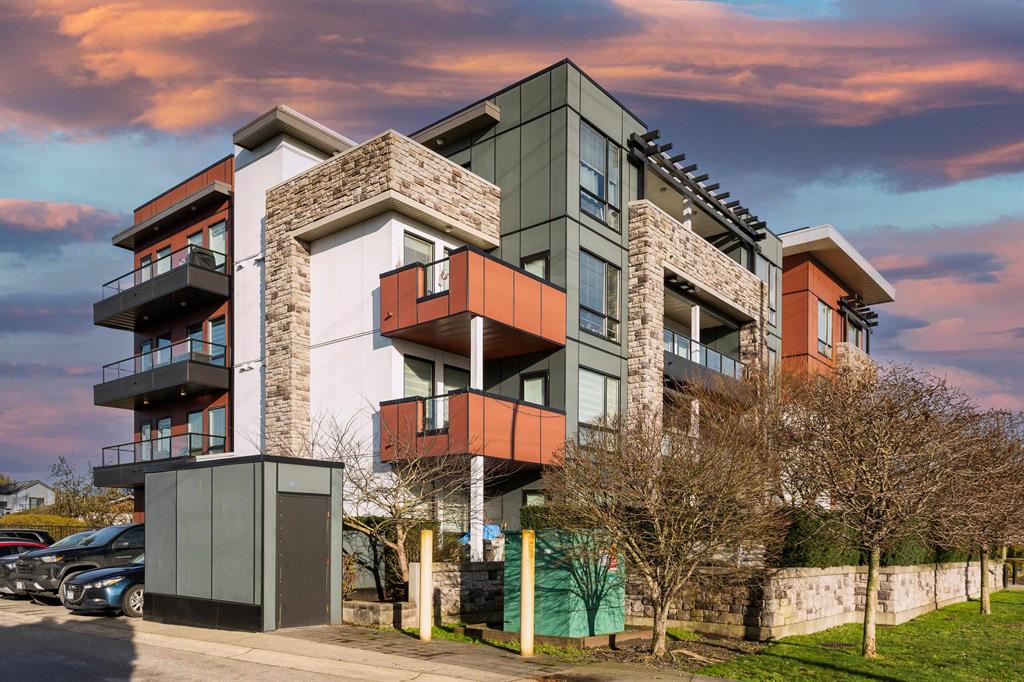
Here's what this looks like in real terms. These figures use a 4.5% interest rate over a 30-year amortization with 20% down, plus rough estimates for insurance, strata fees where they apply, and property taxes. That's deliberate, because looking at the mortgage alone is what makes the numbers feel wrong later. The all-in column is the one that actually matters month to month.
| Income | Roughly Qualifies For | What That Buys | Mortgage | All-In Monthly |
|---|---|---|---|---|
| $75,000 | $405,000 | Older strata condos, West Central and Town Centre | $1,650 | $2,300 |
| $100,000 | $560,000 | Larger condos, some 2 bedroom, some older townhomes | $2,300 | $3,000 |
| $150,000 | $865,000 | Townhomes citywide, newer in Albion and Silver Valley | $3,500 | $4,400 |
| $200,000 | $1,150,000 | Detached enters the picture, below the $1,230,000 Benchmark | $4,700 | $5,900 |
| $250,000 | $1,400,000 | Better-condition detached in Albion, Cottonwood, parts of Silver Valley | $5,900 | $7,400 |
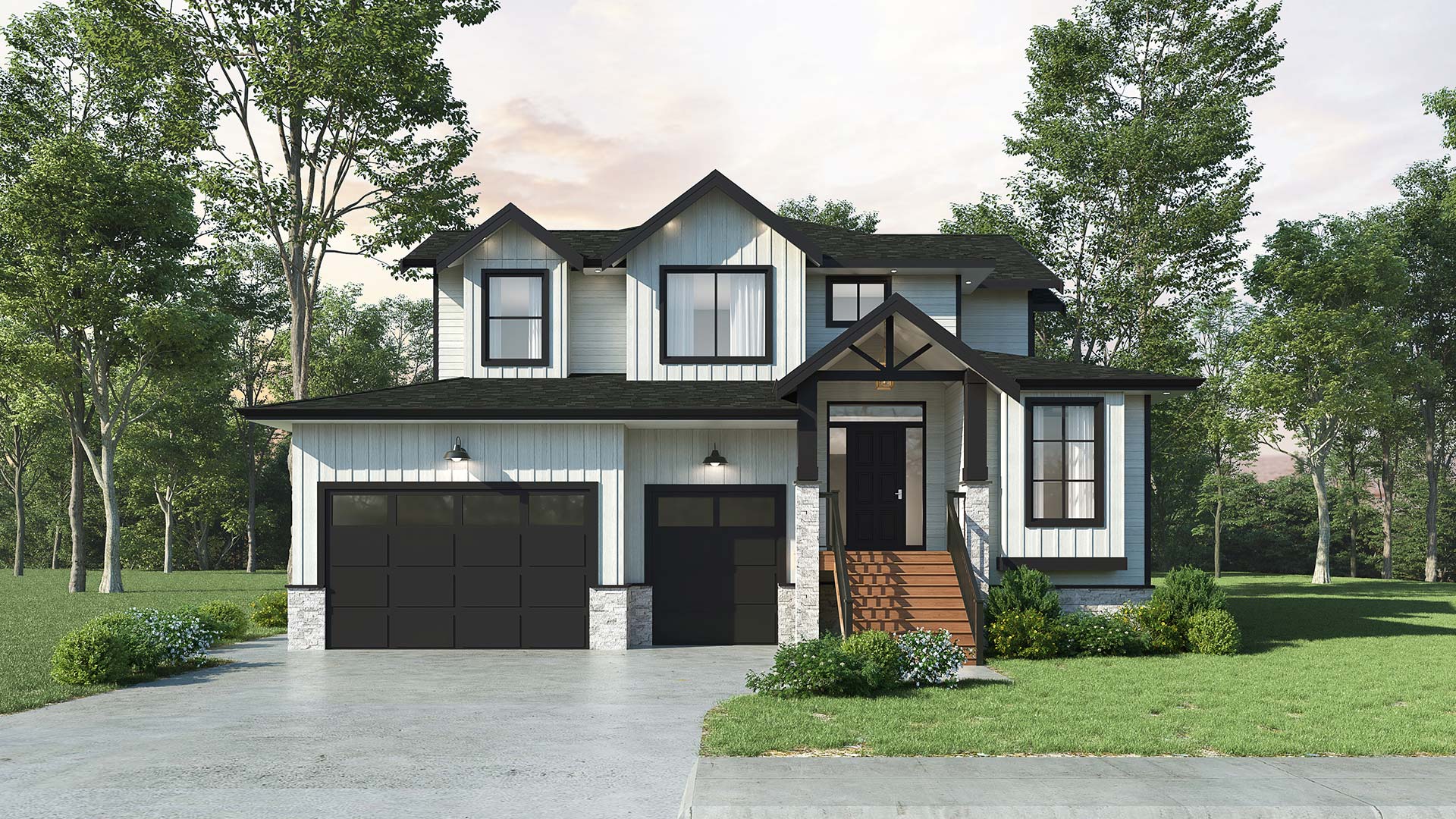
A few things worth pulling out of that table. At $150,000 you'll occasionally find older entry-level detached homes right at the edge of that qualifying range, but supply is limited and they typically need meaningful work, so townhomes are where the realistic inventory sits. At $200,000 the detached Benchmark price of around $1,230,000 comes into reach, including older detached homes in Northwest Maple Ridge, East Central and parts of West Central. The trade-off at the top end isn't what most people expect: once you're in a detached home you stop paying strata fees, which sounds like pure savings, but you're now the contingency fund, and nobody is collecting for the roof on your behalf.
Still Getting the Lay of the Land in Maple Ridge?
The free Maple Ridge relocation guide breaks down neighbourhoods, schools, commute times and which areas actually make sense for your situation. It pairs well with the numbers above.
The 2 Costs Almost No Calculator Includes
There are 2 costs that almost no calculator handles properly, and they're the ones that decide whether a purchase feels comfortable a year in. The first is maintenance. A common rule of thumb is 1% of your home's value every year, so on a $1,000,000 home that's $10,000 annually, or about $830 per month you should be setting aside for roof replacements, appliances, heating systems, repairs and general wear. You likely won't spend it every month or even every year, but if you don't set it aside, the cost eventually shows up in a much more painful way.
If you own a strata property that math changes, because you're already contributing to a contingency reserve fund through your strata fees. You don't need to save the same amount, but you shouldn't save nothing either, especially with major projects like a roof, decks or siding coming. All of that is laid out in the depreciation report for your complex, so read it and know how to interpret it.
The second is property taxes, and in Maple Ridge a detached home assessed around $800,000 might run roughly $4,000 to $5,000 per year, or about $330 to $415 per month. Strata properties often carry somewhat lower property taxes, but strata fees typically range from $250 to $550 per month depending on the building, its age, the amenities and the type of home. Add maintenance, taxes, insurance, utilities and strata where it applies, and the real monthly cost lands $700 to $1,000 higher than your basic mortgage calculator shows, sometimes more.
Common Mistakes to Avoid
The most common mistake is treating the pre-approval as the target. Your pre-approval tells you the maximum a bank is willing to lend, not what will feel comfortable. Your real affordability is the mortgage payment plus taxes plus insurance plus maintenance plus strata fees where they apply, plus the lifestyle costs you don't actually want to give up. Buyers who run only the first number are the ones who feel squeezed later.
The second mistake is assuming a high income means a top-of-range purchase. Most people aren't buying a $1,400,000 home even on a $250,000 income. More often they bought a townhome at $600,000, it's worth $800,000 now, and they're moving that equity into the next property rather than carrying a maxed-out mortgage. That's a very different monthly reality than a first-time buyer stretching to the same price, and it's the clearest illustration of the point: just because you can afford it doesn't mean you should.
The third is underestimating cash on hand, planning carefully for the down payment and then getting caught by the closing costs sitting on top of it. If you want to sanity-check your own numbers, the mortgage payment calculator lets you add the other monthly costs for a holistic picture, and the qualification calculator gives a rough estimate based on your income and debts.
Frequently Asked Questions
How much do I need to make to buy a condo in Maple Ridge?
A $75,000 income qualifies for roughly $405,000, which puts you in the condo market. Most of the options at that budget are older strata buildings in West Central and Town Centre. Your mortgage payment lands near $1,650 per month, and your realistic all-in monthly housing cost is closer to $2,300.
What is the minimum down payment on a $700,000 home in BC?
$45,000. The rule is 5% on the first $500,000 and 10% on the balance between $500,000 and $1,500,000. Below $500,000 the minimum is a flat 5%. If you put down less than 20%, you also pay mortgage insurance, which gets added to your loan.
Do first-time buyers pay property transfer tax in Maple Ridge?
Often some of it. The first-time home buyers' exemption is capped at the tax on the first $500,000 of value, so the most it saves you is $8,000. On a $700,000 purchase the full tax is $12,000, the exemption covers $8,000, and you still pay $4,000. The exemption phases out entirely above $860,000.
How much should I budget for closing costs?
For a home in the $600,000 to $800,000 range, budget $15,000 to $22,000 on top of your down payment. That covers property transfer tax, a home inspection, legal fees, the property tax adjustment and moving costs. It does not cover furniture, repairs, or the small surprises that show up after you move in.
Can basement suite income help me qualify for a bigger mortgage?
It can. Depending on the suite, you might see $1,200 to $1,800 per month, sometimes more, and that can be the difference between a detached home being out of reach and becoming possible. How much of it counts toward qualifying depends on the lender and on whether the suite is legal or unauthorized.
Why is my real monthly cost higher than the mortgage calculator says?
Because most calculators show the mortgage payment alone. Once you add maintenance, property taxes, insurance, utilities and strata fees where they apply, the real monthly cost can run $700 to $1,000 higher, or more. Property taxes on a detached home assessed around $800,000 in Maple Ridge might run roughly $4,000 to $5,000 per year, or about $330 to $415 per month, and strata fees often range from $250 to $550 per month.
The Bottom Line
Maple Ridge can absolutely give you more value than other parts of the Lower Mainland, and for the right buyer it's one of the best places to stretch into more space without leaving the region entirely. But the numbers only work if you run the full picture before you start writing offers. The buyers who end up comfortable aren't the ones who bought the most expensive home they could qualify for. They're the ones who bought a home that still let them live their life after they moved in.
Related Reading
- Ranking Every Maple Ridge Area From Worst to Best
- Where to Live in Maple Ridge: The Neighbourhoods That Actually Fit Your Life
- Pros & Cons of Living in Maple Ridge BC
- Don't Pick the Wrong Neighbourhood in Maple Ridge
- How Much Home You Can Actually Afford in Langley by Salary

Alex Dunbar Personal Real Estate Corporation
REAL Broker BC Ltd. | Living in the Lower Mainland
Buying, selling or investing in Maple Ridge and the surrounding cities? Whether you're new to the area or a longtime local, I'll help you make the right move. Book a 30-minute no-pressure call with me and we'll go over your goals, timeline and budget.
Categories
Recent Posts



GET MORE INFORMATION