
Moving to the Lower Mainland BC: Where Should You Live?
If you're planning a move to the Lower Mainland of British Columbia, the first question you'll face isn't "should I buy or rent?" It's a more basic one: which city?
The Lower Mainland is not a single community. It's a sprawling region of distinct cities, each with its own character, price point, commute profile, and lifestyle. For people relocating from other provinces, this is often the most disorienting part of the move. You've heard of Vancouver. You may have heard of Surrey. But Langley? Maple Ridge? Pitt Meadows? Cloverdale?
This guide is written for people who are serious about moving to the Lower Mainland and want to understand the differences between the cities that get the most attention from buyers who don't want to pay Vancouver prices. It focuses on Surrey, Langley, and Maple Ridge, the three markets I work in most, and explains honestly who each city suits best.
The Lower Mainland: A Quick Orientation
The Lower Mainland broadly refers to the Metro Vancouver area and the Fraser Valley, including cities like Burnaby, Richmond, Surrey, Langley, Abbotsford, Chilliwack, and Maple Ridge.
If you're moving from Ontario, Alberta, or another province, here's the shorthand:
- Metro Vancouver (Vancouver, Burnaby, Richmond, North Shore): most expensive, most urban, best transit
- Fraser Valley East (Abbotsford, Chilliwack): most affordable, more rural, further from Vancouver
- The middle corridor (Surrey, Langley, Maple Ridge): the sweet spot for most buyers who need a real home at a real price without moving to a city two hours east
Surrey, Langley, and Maple Ridge are the cities where most of the people I work with end up. They're connected to Vancouver by highway and (in Surrey and parts of Langley) by SkyTrain. They offer a genuine community feel, real housing options across all budgets, and access to the outdoor lifestyle that draws people to BC in the first place.
Surrey BC: The Largest City You've Probably Underestimated
Surrey is the second-largest city in BC by population. It's also the most misunderstood, particularly among people relocating from out of province who've absorbed a surface-level reputation that doesn't reflect the city's full reality.
What Surrey actually is
Surrey is not one neighbourhood. It's a collection of very different communities stitched together under a single city name. South Surrey is closer in character to White Rock, with a suburban, family-oriented feel and prices that reflect it. Cloverdale is a heritage-flavoured town centre surrounded by family neighbourhoods. Fleetwood is a mid-range community popular with commuters, with SkyTrain stations coming on the Surrey-Langley line. Surrey City Centre is a rapidly densifying urban core with pre-sale towers and transit-oriented development. Newton and Whalley have more urban density, more affordability, and more of the city's complexity.
The point is that "Surrey" as a single concept is too broad to be useful. When buyers say they're not sure about Surrey, they usually mean they've formed an impression based on one part of the city. The right question is which Surrey you're talking about.
Who Surrey suits best
Surrey is the right city for buyers who want access to the SkyTrain network, a wide range of price points, and a genuine urban environment that isn't as expensive as Burnaby or Vancouver. It suits commuters who need easy highway access, families who want established neighbourhoods with schools and parks, and first-time buyers looking for entry-level attached housing.
South Surrey and Cloverdale specifically suit buyers who want a quieter, more suburban pace without giving up the infrastructure of a major city.
For a detailed look at Surrey's neighbourhoods, livability, and what buyers actually say about living there, read our guide to Is Surrey BC a Good Place to Live?
Surrey price context
Surrey's benchmark pricing varies significantly by sub-area and property type. South Surrey detached homes sit at the higher end of the FVREB zone. Surrey City Centre condos represent some of the most affordable entry points for attached buyers in the region. The middle of the city, Fleetwood and Cloverdale, lands in between.
For a city-wide reference point, the MLS HPI Benchmark for the City of Surrey in August 2026 was $1,407,800 for a detached home, $764,900 for a townhouse and $450,800 for an apartment.
What to know before you commit to Surrey
Traffic on the King George and Fraser Highway corridors can be significant during peak hours. The SkyTrain is a major asset for commuters, but if your destination isn't on the Expo Line, commute times vary. Surrey City Centre is in active transformation, which means construction noise and a neighbourhood that looks different today than it will in 10 years, for better or worse.
Langley BC: The Practical Choice for Families and First-Time Buyers
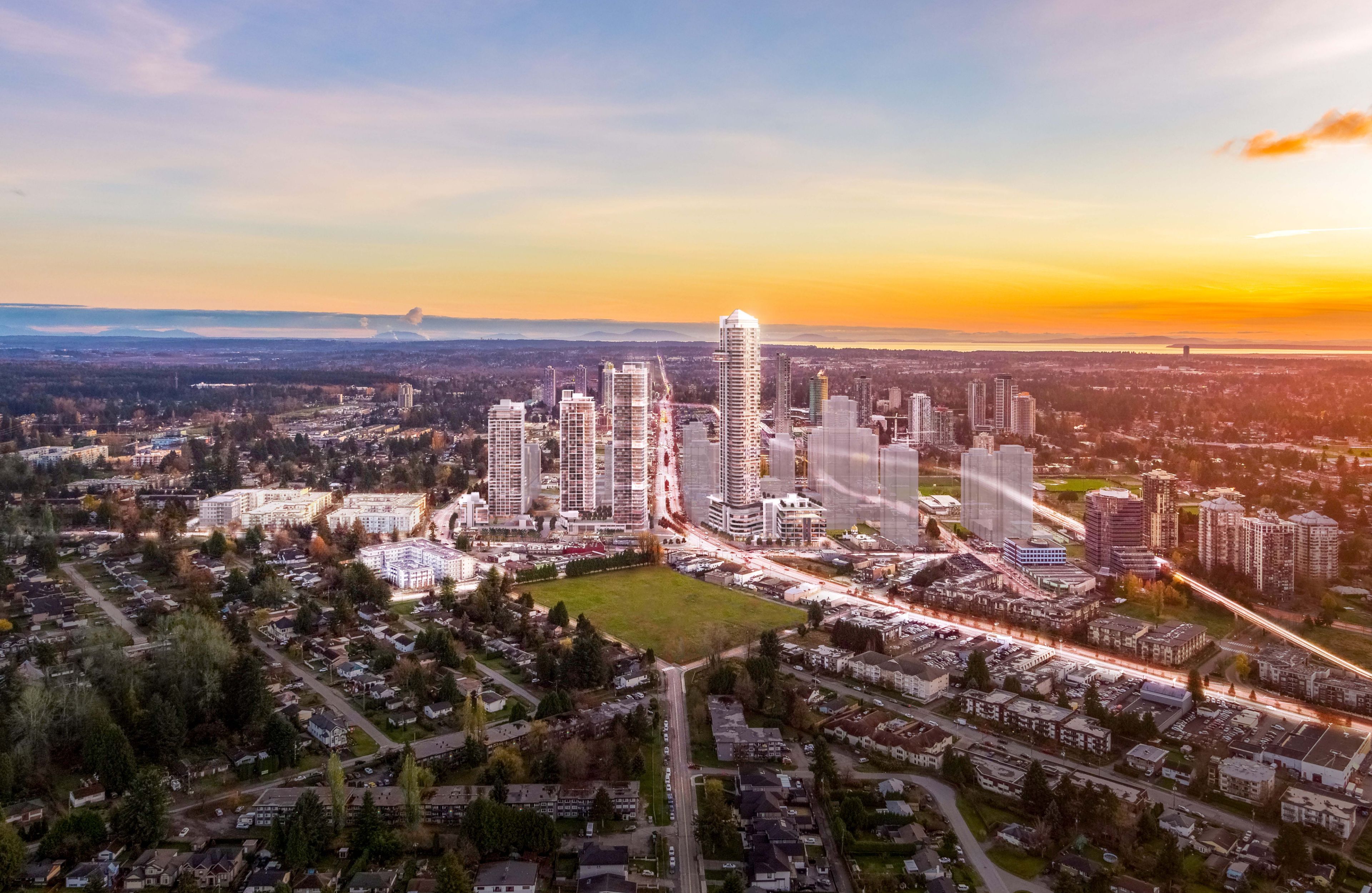
Langley sits east of Surrey and offers a combination of affordability, community feel, and growth momentum that makes it one of the most popular cities for buyers priced out of the west side of Metro Vancouver.
What Langley actually is
There are two official Langley jurisdictions: the City of Langley (a small, dense urban centre) and the Township of Langley (a large, geographically diverse municipality that includes Fort Langley, Willoughby, Walnut Grove, Brookswood, Murrayville, and Aldergrove). When people say "Langley," they usually mean the Township.
The City of Langley leans toward condos and smaller townhomes. The Township offers detached homes, townhomes, and acreage. If you want space, the Township is where you'll find it.
Willoughby, in the northeast of the Township, has become a major growth area for new townhomes and condos, particularly for younger buyers and families. Fort Langley is a heritage village on the Fraser River, popular with buyers who want character architecture and a distinct community identity. Walnut Grove is a well-established family area with good schools and parks.
Who Langley suits best
Langley suits families who want established schools and a quieter neighbourhood pace. It suits first-time buyers who are priced out of Surrey's more expensive sub-areas and are willing to trade a longer commute for more space. It also suits buyers who work in Langley itself or in the growing commercial corridors along Highway 1.
The upcoming SkyTrain extension to Langley (the Surrey-Langley SkyTrain project) is a significant consideration. The line's 8 new stations end at Langley City Centre (203 Street), with Willowbrook station at 196 Street in the Township, so the City of Langley and the Willowbrook area will gain direct SkyTrain access when it opens, expected late 2029.
For a full look at Langley's sub-areas, schools, and what life in the Township actually looks like, read our guide to Is Langley BC a Good Place to Live?
Langley price context
Langley isn't cheaper than Surrey on Benchmark prices. In August 2026, Langley's MLS HPI Benchmark was $1,479,400 for a detached home, $806,400 for a townhouse and $534,000 for an apartment, a little above Surrey on all 3. What you're paying for in Langley is the community feel and the coming SkyTrain line, not a discount.
What to know before you commit to Langley
Commuting to downtown Vancouver from Langley via car takes 45-75 minutes depending on traffic and starting point. The SkyTrain extension will change this for commuters headed toward Burnaby and Vancouver, but the line isn't expected to open until late 2029. If your work is in Metro Vancouver and the commute is a hard constraint, factor this in seriously.
Langley is a car-dependent city in most sub-areas. Public transit exists but is not as comprehensive as Surrey's SkyTrain-adjacent zones. Most families operate two vehicles.
Maple Ridge BC: The Lifestyle Trade-Off City
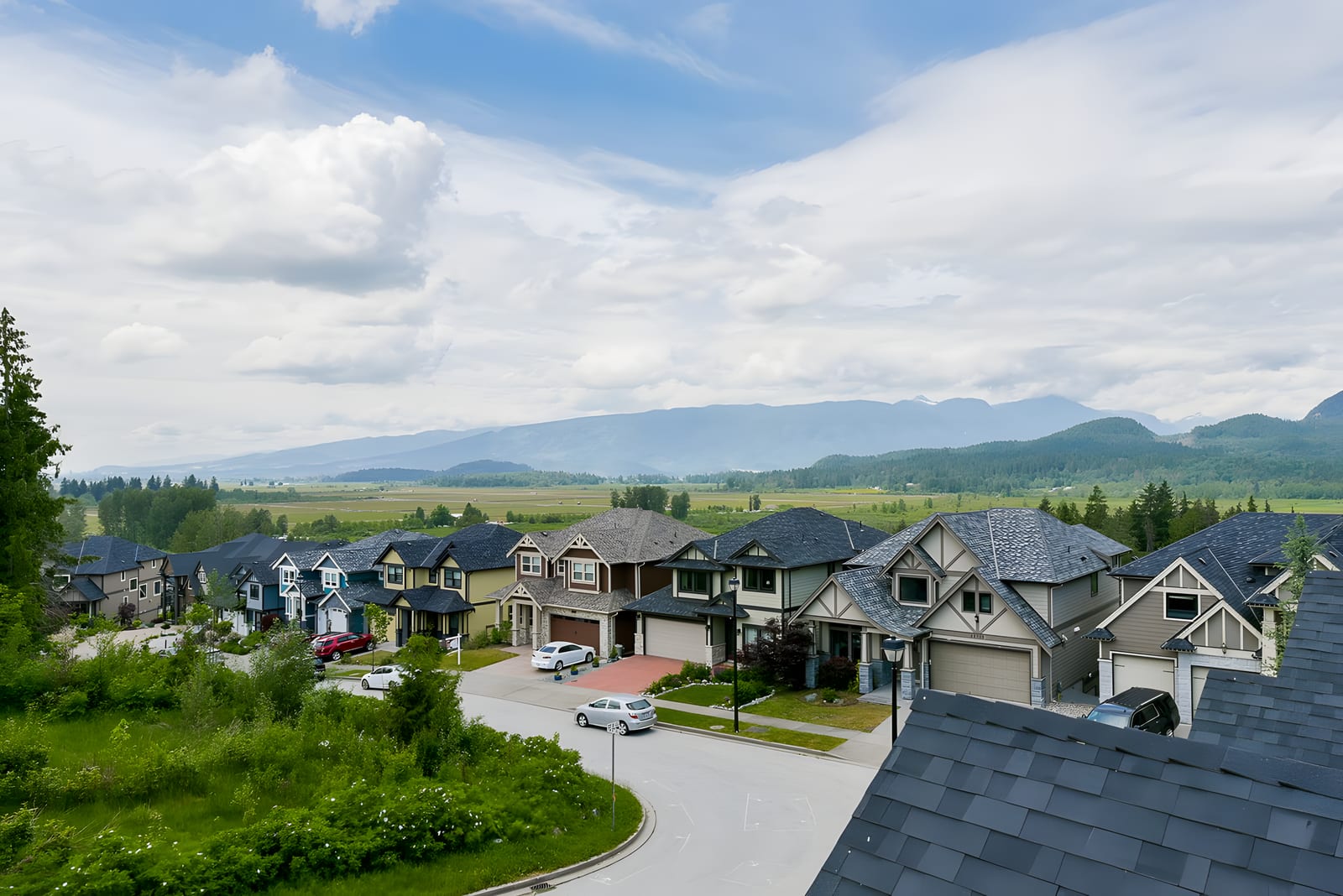
Maple Ridge sits east of the urban Surrey-Langley corridor, bordered by the Fraser River to the south and the Coast Mountains to the north. It's the most affordable of the three cities this guide covers for detached homes and townhomes, and the most distinct in character.
What Maple Ridge actually is
Maple Ridge is smaller and more self-contained than Surrey or Langley. Its downtown core is compact and growing. Albion is a newer residential area popular with families. Cottonwood and Silver Valley are established neighbourhoods with a nature-oriented feel. The city is flanked by trails, rivers, and mountains in a way that genuinely shapes daily life: people here hike, bike, and paddle on weekends as a default, not an exception.
If you want more square footage, more outdoor access, and a quieter pace of life, and you're willing to accept a longer commute and less urban infrastructure, Maple Ridge is worth serious consideration.
Who Maple Ridge suits best
Maple Ridge suits buyers who prioritise space and outdoor lifestyle over commute convenience. It suits remote workers for whom the commute is infrequent. It suits families who want larger lots and a smaller-town feel without leaving the Lower Mainland entirely. It also suits buyers who've been priced out of Surrey and Langley and need to find a way into the market without compromising on property type.
The price difference is real on detached homes: in August 2026, Maple Ridge's MLS HPI Benchmark for a detached home was $1,177,800, about 16% below Surrey ($1,407,800) and about 20% below Langley ($1,479,400). The gap is smaller for townhomes ($704,100 in Maple Ridge), and Maple Ridge apartments ($504,300) actually Benchmark above Surrey's. For buyers choosing between a condo in Surrey and a townhome or small detached in Maple Ridge, that gap matters.
For the full picture on Maple Ridge's communities, commute realities, and lifestyle tradeoffs, read Is Maple Ridge BC a Good Place to Live?
What to know before you commit to Maple Ridge
Maple Ridge is not on the SkyTrain network and there is no confirmed extension in the near term. Commuting to Vancouver or Surrey by car on the Lougheed Highway or Golden Ears Bridge takes 45-90 minutes depending on traffic. West Coast Express trains run from Maple Ridge to downtown Vancouver on a limited weekday schedule. If your work requires regular Metro Vancouver commuting, this trade-off should be taken seriously.
Maple Ridge also has fewer commercial amenities than Surrey or Langley in the immediate term, though this is changing. If walkability and urban conveniences are priorities, understand that much of Maple Ridge is a car-dependent suburban/semi-rural environment.
Side-by-Side Comparison
| Surrey BC | Langley BC | Maple Ridge BC | |
|---|---|---|---|
| Character | Urban to suburban. Wide range by sub-area. | Suburban to semi-rural. Distinct from City to Township. | Small-city to semi-rural. Nature-adjacent. |
| Price range (detached) | Mid to high within FVREB zone. South Surrey at premium end. | A little above Surrey in detached. | About 16% to 20% below Surrey and Langley. Most affordable of three. |
| SkyTrain access | Yes (Expo, King George, future Surrey-Langley). | Not yet. Surrey-Langley SkyTrain expected late 2029. | No. West Coast Express on limited schedule. |
| Commute to downtown | 45-70 min by SkyTrain. 45-75 min by car. | 60-90 min by car. Better with SkyTrain extension. | 60-90 min by car. About 50 to 56 min by West Coast Express. |
| Family feel | Strong in Cloverdale, Fleetwood, South Surrey. | Strong in Walnut Grove, Murrayville, Fort Langley. | Strong throughout. Smaller schools. Tight community. |
| Outdoor lifestyle | Good. Parks and trails. Less immediate nature. | Good. Watershed trails, Nicomekl River. Fort Langley riverside. | Excellent. Direct mountain and river access. |
| Development pace | High. Especially City Centre and Fleetwood. | High in Willoughby. Moderate elsewhere. | Moderate. Growing but slower than Surrey/Langley. |
| Best for | Commuters, first-time buyers, pre-sale buyers, urban lifestyle seekers. | Families, first-time buyers, buyers who want space near SkyTrain corridor. | Remote workers, outdoor lifestyle buyers, buyers maximising space. |
How to Make the Decision

The question isn't which city is objectively better. It's which city fits your life.
Here's a practical framework:
If commute frequency is high (4-5 days per week to Metro Vancouver): Surrey gives you the most transit flexibility. If SkyTrain access matters, focus on City Centre or areas near the King George corridor today, or Fleetwood once the Surrey-Langley line opens. Langley becomes more viable once the SkyTrain extension opens.
If you're a family prioritising schools and community: All three cities have strong school options. Langley's Walnut Grove and Murrayville are well-regarded. Surrey's Cloverdale and South Surrey have strong catchments. Maple Ridge's smaller school environment suits some families and not others.
If budget is the primary constraint: Maple Ridge gets you the most space for the money. Langley's detached Benchmark sits a little above Surrey's. Surrey apartments are the cheapest entry point of the three cities, with an August 2026 Benchmark of $450,800.
If outdoor lifestyle is the priority: Maple Ridge is in a different category. If hiking, kayaking, mountain biking, and direct nature access are central to your life, the commute trade-off is often worth it for buyers who value this.
If you want neighbourhood character and walkability: Fort Langley and South Surrey are the two strongest options. Fort Langley has a heritage downtown. South Surrey has retail, restaurants, and parks without the urban intensity of City Centre.
Frequently Asked Questions
Is the Lower Mainland affordable compared to Metro Vancouver? Surrey, Langley, and Maple Ridge are significantly more affordable than Metro Vancouver cities like Vancouver, Burnaby, and Richmond. The gap is most pronounced in the detached home category. Condos and townhomes in these cities can still be expensive by national standards, but they represent real value relative to what similar money buys closer to downtown Vancouver.
Which city in the Lower Mainland has the best SkyTrain access? Surrey currently has the best SkyTrain coverage among the three cities in this guide. The King George station anchors the south end of the Expo Line. The Surrey-Langley SkyTrain extension, when complete, will add 8 new stations east to Langley City Centre, expected to open late 2029. Maple Ridge is not on the SkyTrain network.
Is it better to live in Surrey or Langley? It depends on what you're optimising for. Surrey offers more transit access and a wider range of sub-areas. Langley offers a quieter pace, though its detached Benchmark runs a little above Surrey's. Families with school-aged children often favour Langley. Commuters who rely on SkyTrain often favour Surrey. The best answer is always specific to your situation.
Is Maple Ridge a good place to live? Yes, for the right buyer. If you work remotely, value outdoor access, want space, and are willing to accept a longer commute on the days you do travel, Maple Ridge offers strong livability. It is not the right choice for buyers who commute daily to Metro Vancouver or who need urban infrastructure.
How do I choose a neighbourhood in the Lower Mainland without visiting first? This is one of the most common challenges for out-of-province buyers. Start with the YouTube channel Living in the Lower Mainland, which covers dozens of communities in detail. Then book a relocation consultation at discoverhomesfirst.com to go deeper on the specific neighbourhoods that match your life.
What is the commute like from Surrey or Langley to downtown Vancouver? From Surrey via SkyTrain, downtown Vancouver is roughly 45-70 minutes depending on your starting station. From Langley by car, expect 60-90 minutes. From Maple Ridge by car, expect 60-90 minutes. The West Coast Express from Maple Ridge runs to downtown Vancouver in about 50 minutes from Maple Meadows station and about 56 minutes from Port Haney station, on a limited weekday schedule.
Where to Go Next
This guide gives you a starting framework. Your actual decision will come down to specifics: your commute, your budget, the property type you need, and the kind of community you want to be in.
The best next step is a conversation, not more research.
At discoverhomesfirst.com, you can book a relocation consultation to talk through your situation, get honest neighbourhood recommendations, and start narrowing down which communities actually fit your life. There's no pitch and no pressure. Just a conversation with someone who knows these cities well and can help you think through the decision clearly.
If you're ready to start comparing specific neighbourhoods and price points, our guide to how to buy in Surrey BC walks through the full purchase process. If you want someone in your corner as you search, you can learn more about working with a buyer agent in Surrey.

Alex Dunbar Personal Real Estate Corporation
REAL Broker BC Ltd. | Living in the Lower Mainland
Buying, selling or investing in the Lower Mainland? Whether you're new to the area or a longtime local, I'll help you make the right move. Book a 30-minute no-pressure call with me and we'll go over your goals, timeline and budget.
Categories
Recent Posts



GET MORE INFORMATION