
Buying a House With a Mortgage Helper Suite in Surrey or Langley: How Much It Really Helps You Qualify
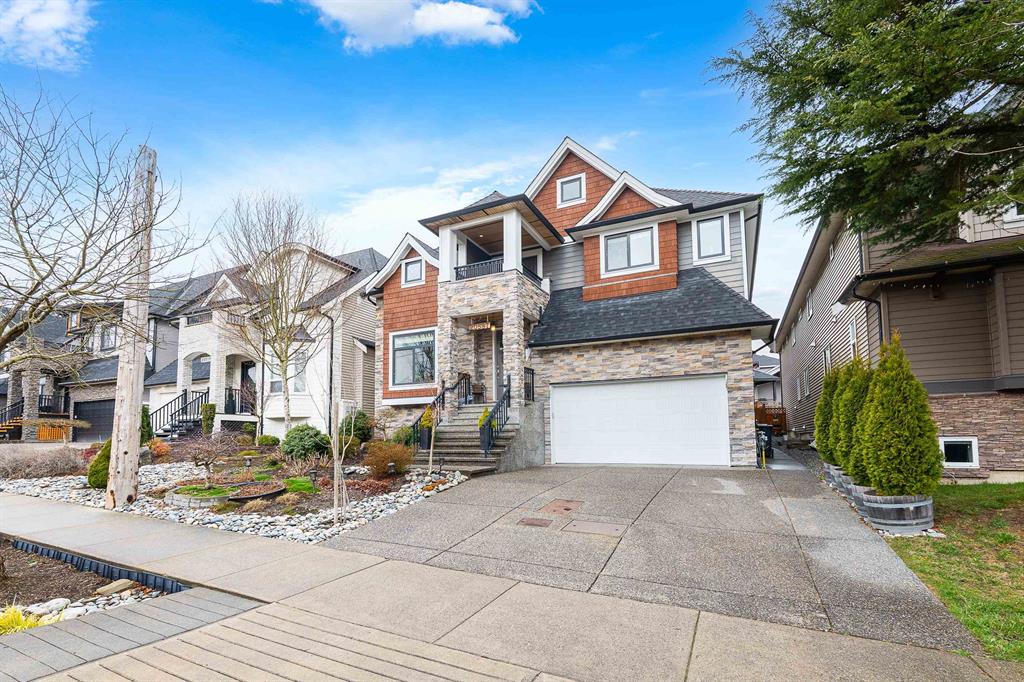
A basement suite can add six figures to what a lender will let you borrow. It can also leave you carrying the full mortgage on your own if the suite sits empty, if the bank won't count it or if you need that space for your own family sooner than you planned.
So before you stretch from a townhome to a suited detached home in Surrey or Langley, here's how the suite income actually gets counted, what it's really worth on paper and who should skip this strategy altogether.
The Short Version
- For an insured mortgage on an owner-occupied home with one suite, CMHC and Sagen both publish rules that let a lender count up to 100% of the suite's rent as extra income.
- Insured mortgages stop at a $1.5 million purchase price. Above that, and usually with 20% or more down, your lender's own policy decides how much rent counts, and that varies.
- In a simple example, $2,000 a month of suite rent can raise what you qualify for by roughly $58,000 to $116,000, depending on how much of the rent your lender counts.
- An unpermitted suite can count for less, or nothing, and both cities charge yearly fees on registered suites.
- None of this guarantees an approval. Your lender makes that call on your whole file.
How Lenders Count Suite Income
Lenders qualify you on two ratios. Gross Debt Service (GDS) is your housing costs against your income. Total Debt Service (TDS) adds your other debts, like a car loan. CMHC caps these at 39% and 44%.
Suite rent helps by raising the income side of those ratios. On its rental income page (published May 22, 2024), CMHC says that for a 2-unit owner-occupied home being insured, the lender can use up to 100% of the gross rent, added to your gross annual income. Sagen, another of Canada's mortgage insurers, also accepts 100% for an owner-occupied 2-unit home, and says the rent can be shown with a signed lease or an appraiser's fair market rent.
That's the published ceiling. A CMHC reference card also shows a lower option of up to 50%, so the published range for this kind of home is 50% to 100% of the rent, depending on the method the lender uses.
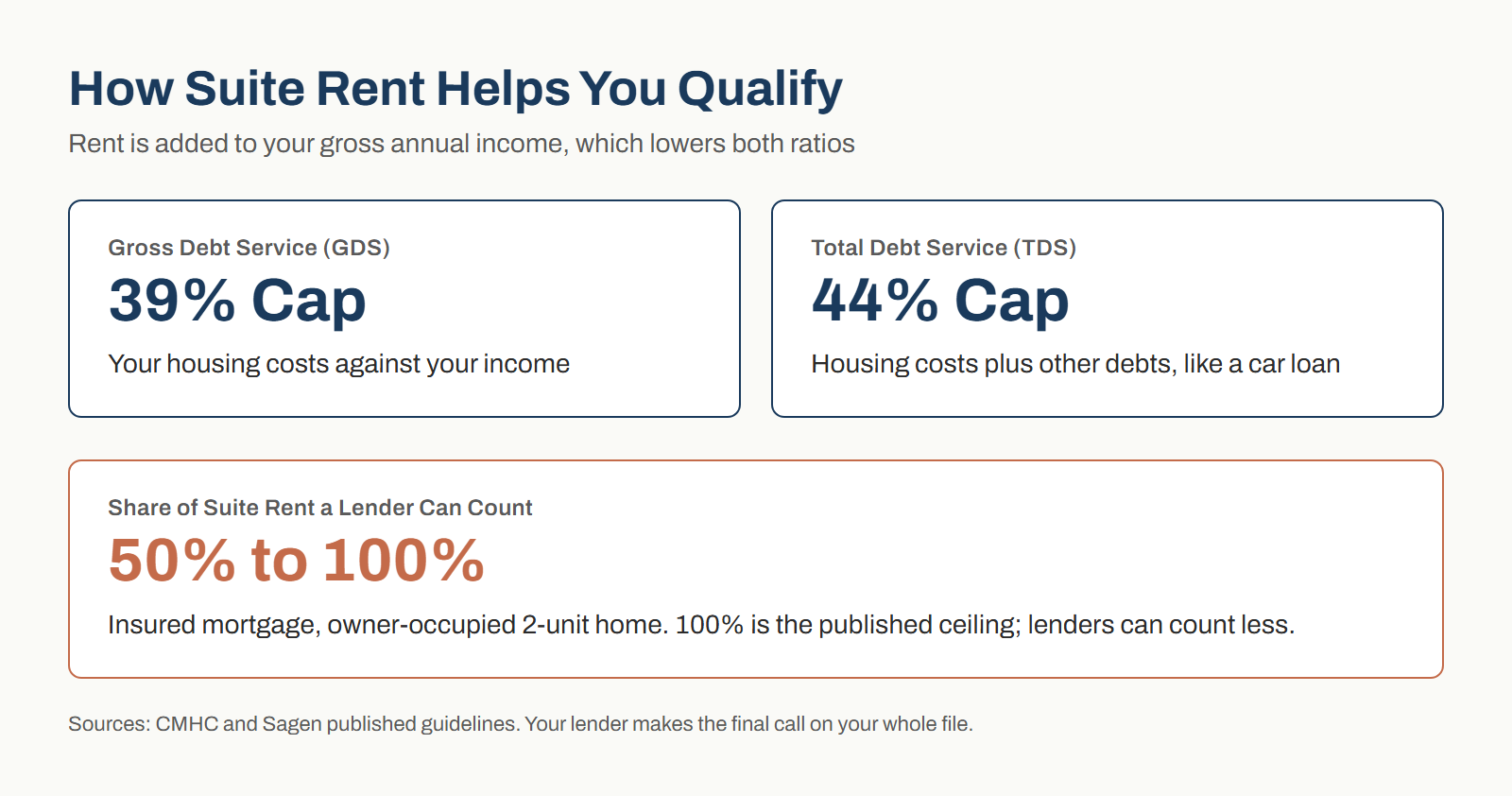
The upside: on an insured mortgage, a legal suite can count almost dollar for dollar as income.
The catch: "up to" means the lender can count less. If the rent comes from an appraiser's estimate instead of a lease, Sagen tells lenders to apply a vacancy allowance, which cuts the number down.
The $1.5 Million Line Changes Everything
Here's the part that catches move-up buyers. The rules above are mortgage insurance rules. Since December 15, 2024, the mortgage insurance you need when you put down less than 20% is only available on a home under $1.5 million.
If the suited home you're looking at is priced at $1.5 million or more, or you're putting 20% or more down from the sale of your townhome, your mortgage will usually be uninsured. The insurer rules don't apply. Your lender's own policy does, and lenders don't publish those policies in one place. I couldn't confirm a single figure for uninsured lenders from a published source, so treat any number you hear secondhand as a starting point and ask your lender for their percentage in writing.
On an uninsured mortgage, you also qualify at a stress-tested rate. OSFI's rule is the greater of your contract rate plus 2% or 5.25%.
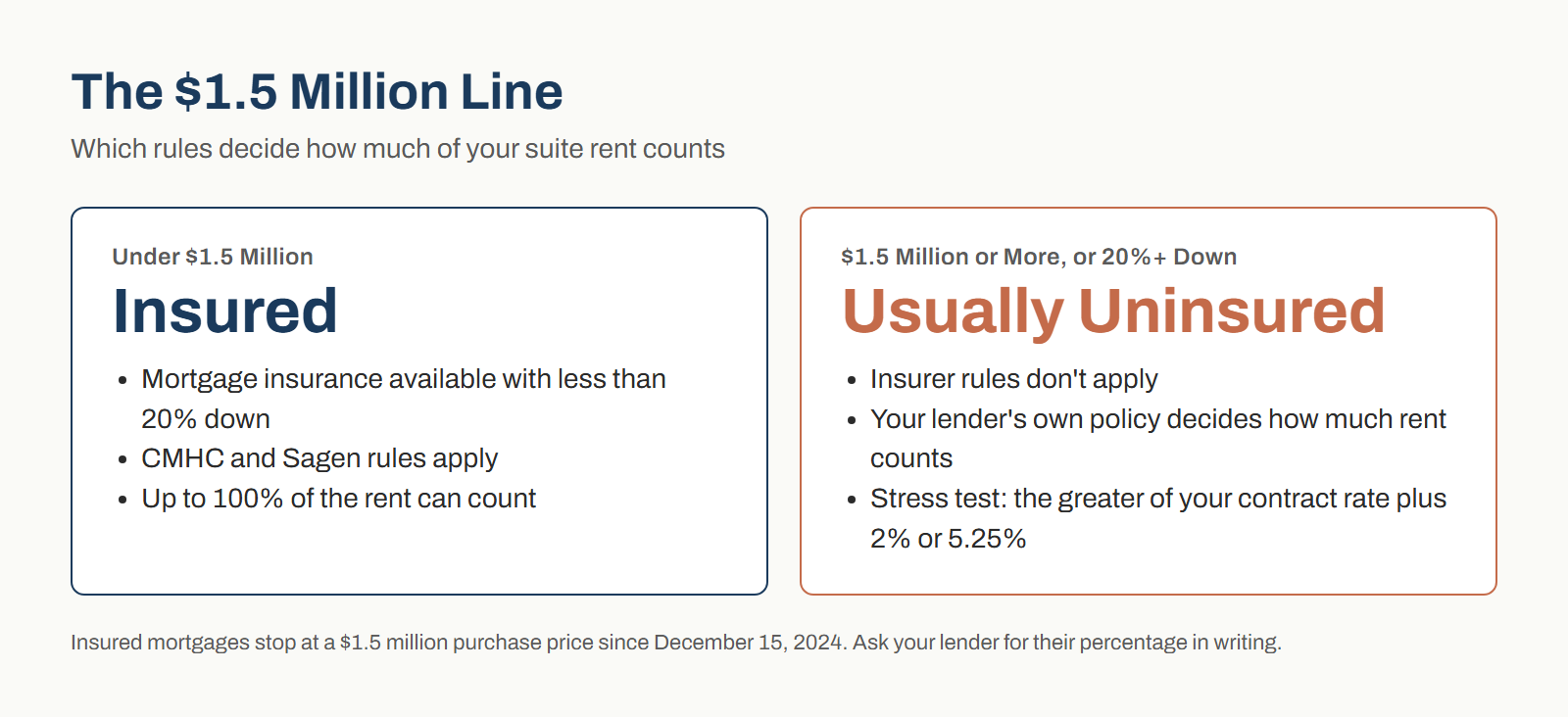
The upside: a bigger down payment from your townhome sale can make the suite matter less, because you're borrowing less.
The catch: the suite you were counting on to qualify may count for less than you expected with the lender you end up using.
What a Suite Is Actually Worth on Paper
Let's run a simple example. It's an illustration, not a quote.
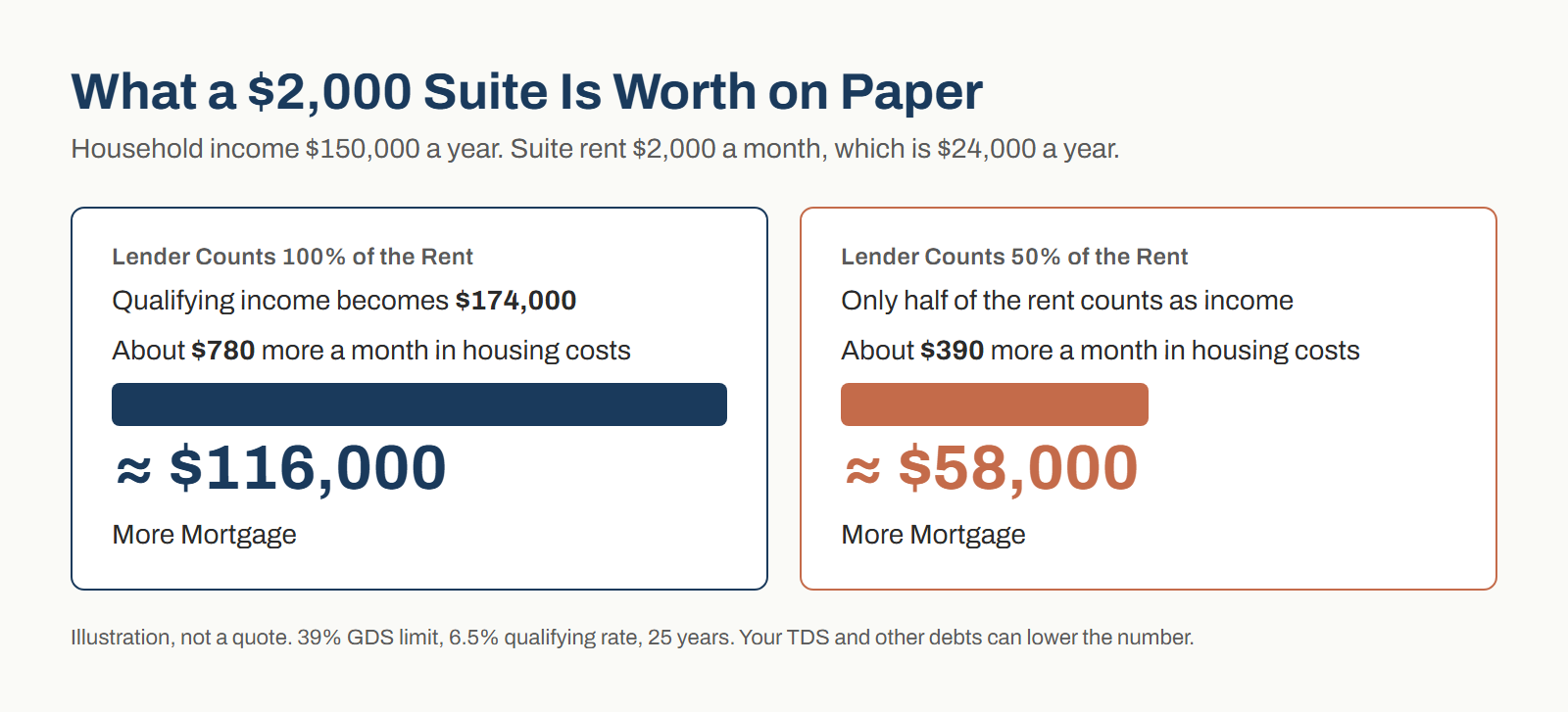
Say your household earns $150,000 a year and the suite rents for $2,000 a month, which is $24,000 a year.
If your lender counts 100% of that rent, your qualifying income becomes $174,000. At the 39% GDS limit, that lets you carry about $780 more a month in housing costs. At a 6.5% qualifying rate over 25 years, $780 a month supports roughly $116,000 more mortgage.
If your lender counts only 50%, that drops to about $390 a month, or roughly $58,000 more mortgage.
To run your own numbers, try my Mortgage Qualification Calculator with and without the suite rent added to your income.
So the same basement is worth anywhere from about $58,000 to $116,000 of extra borrowing power in this example. That's real money. It's also a lot less than some people assume when they hear "mortgage helper."
The upside: a suite can be the difference between qualifying for a detached home and not qualifying.
The catch: your TDS adds your car loan, credit cards and other debts, and it can hit its limit before your GDS does. Your lender can also count less than the full rent, so your actual number may be lower.
Tools & Resources
Run your own numbers, find areas that fit how you live and compare them side by side.
Legal, Registered or Neither
The rules on suites themselves changed in BC. Since the province's small-scale, multi-unit housing law (Royal Assent December 2023), local governments have to allow at least one secondary suite or laneway home on lots that were zoned only for single family homes. So the zoning question is easier than it used to be.
The permit question isn't. A suite being allowed by zoning doesn't mean the suite in the house you're buying was built with a permit.
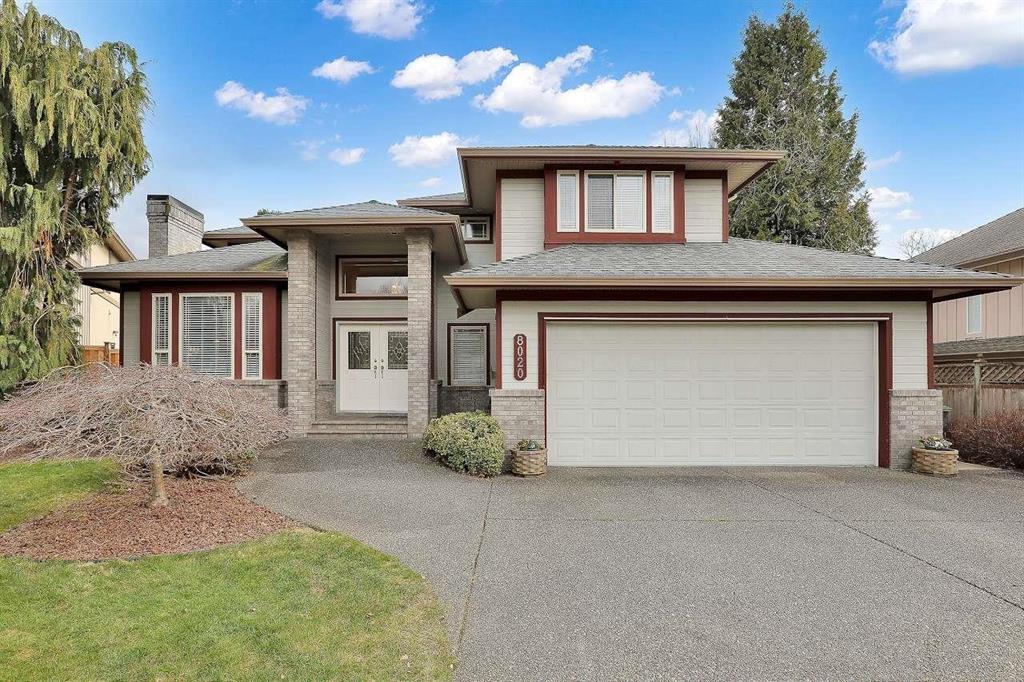
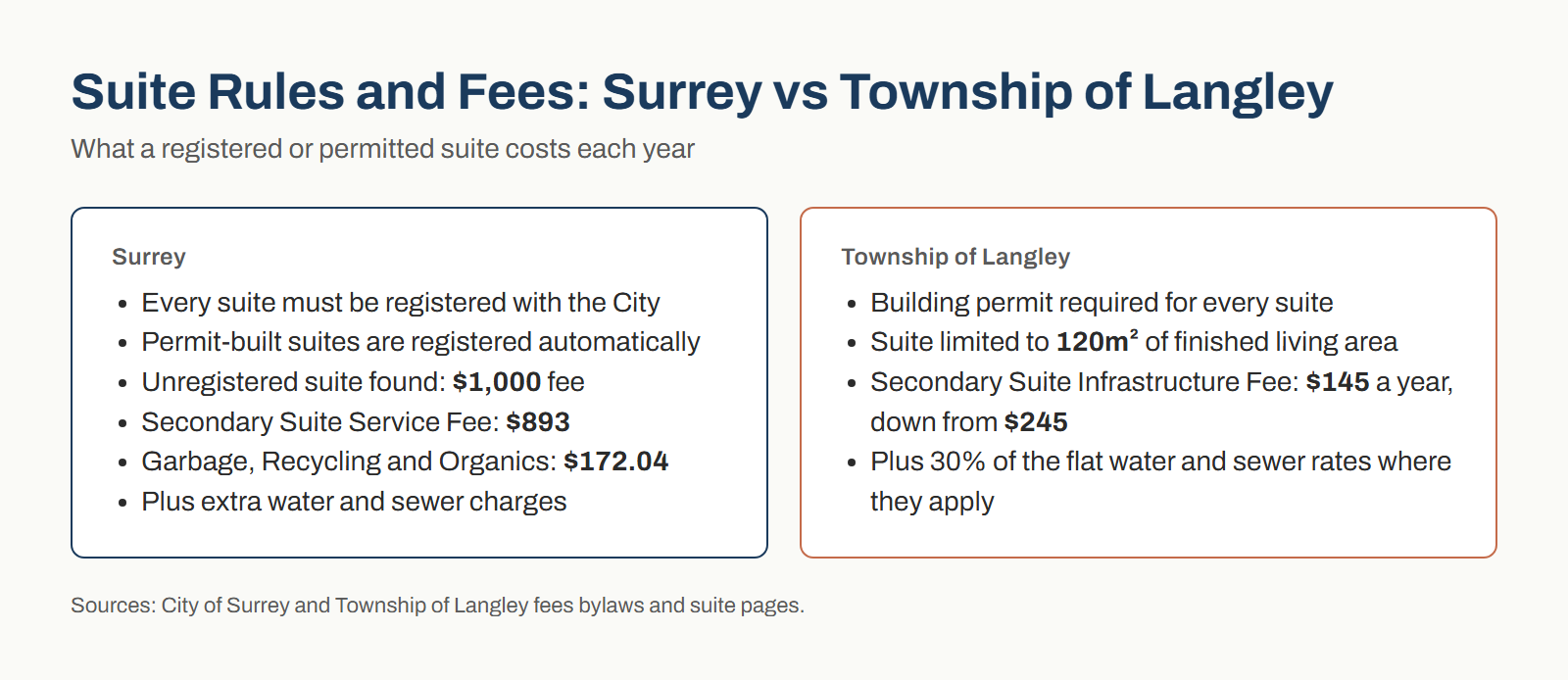
In Surrey, every secondary suite has to be registered with the City. A suite built or legalized through a building permit is registered automatically. If the City finds an unregistered suite, it bills the property a $1,000 fee. For 2026, a registered suite pays an $893 secondary suite service fee plus $172.04 for garbage, recycling and organics, on top of extra water and sewer charges.
In the Township of Langley, a building permit is required for every secondary suite, and a suite is limited to 120m² of finished living area. Suites pay a yearly Secondary Suite Infrastructure Fee ($145 a year from 2026, down from $245 in 2025, per the Township's fees bylaw), plus 30% of the flat water and sewer rates where those apply.
Why this matters for qualifying: Sagen's guidelines say properties must comply with zoning and bylaws, and that rent from an unauthorized suite "may be reviewed on a case-by-case basis." In plain terms, an unpermitted suite can count for less, or nothing at all.
The upside: a permitted, registered suite is easier to finance, insure and sell later.
The catch: those yearly fees come off the rent, and legalizing a suite after you buy can mean real construction costs.
Being a Landlord Is the Real Job
Suite income only helps if someone is paying it. Every month the suite sits empty, you're carrying the payment the bank approved you for without the rent that got you approved.
And once you have a tenant, BC's Residential Tenancy Act applies. If you later want the suite back for yourself or a close family member, you'll generally need to give 3 months' notice for notices received on or after June 18, 2025 and pay the tenant 1 month's rent in compensation. The person moving in has to intend to live there for at least 12 months. A notice can't end a fixed-term tenancy before the term is up.
The upside: a good long-term tenant can cover a meaningful share of your payment for years.
The catch: you can't treat the suite as flexible space while it's rented. Plan your own family's use of it 5 years out, not 5 months.
Who This Is NOT For
A suited home is a great fit for some buyers. Here's who I'd steer away from it, and where I'd have them look instead.
You don't want to be a landlord. If dealing with a tenant, repairs and a shared driveway sounds like stress you don't need, don't buy a house whose math only works with a tenant in it. Look at a larger end-unit townhome, or a detached home without a suite in an area where detached prices sit lower. Compare the Maple Ridge detached Benchmark with Surrey's and Langley's before you rule it out. If you're not sure which areas fit, my Neighbourhood Matchmaker can help you narrow it down.
You'll need the basement for your own family within 5 years. Growing kids, a parent moving in or a home business will take that space back. Count the mortgage on your income alone and look for a home with a finished basement that isn't set up as a suite.
You can't confirm the suite's permit history. If there's no permit, no final inspection and no registration on file, don't count that rent as part of how you qualify. Look at homes where the suite was built under the original building permit, or budget to legalize it and qualify without the rent.
FAQ
Will a lender count my suite income if I don't have a tenant yet?
Often yes, through an appraiser's estimate of fair market rent. Sagen says lenders using that estimate should apply a vacancy allowance, so expect the counted amount to be lower than a signed lease would show.
Do all lenders count 100% of the rent?
No. 100% is the published ceiling for insured mortgages on owner-occupied 2-unit homes. Lenders can count less, and uninsured lenders set their own policies.
Is every basement suite in Surrey legal now that the province changed the zoning?
No. The zoning allows a suite, but the suite still needs a building permit and, in Surrey, registration with the City.
Can I count Airbnb income?
Don't plan on it. The published insurer rules are written around rent you can show with a lease or an appraiser's fair market rent, so ask your lender before you count any short-term rental income.
Does suite income guarantee I'll qualify?
No. It's one input. Your credit, debts, down payment and the property itself all feed into the lender's decision.
Before You Rely on These Numbers
I am not a mortgage professional. This is not financial advice. Please consult with a professional before taking this at face value.
If you'd like to be connected with a mortgage broker who can look at your own file, reach out and I'll put you in touch, or you can Apply for Pre-Approval directly.
Talk It Through Before You Write an Offer
If you're weighing a suited home in Surrey or Langley against staying in a townhome, I'm happy to walk through the trade-offs with you, including which homes have suites you can actually verify.
Related Reading

Alex Dunbar Personal Real Estate Corporation
REAL Broker BC Ltd. | Living in the Lower Mainland
Buying, selling or investing in Surrey and the surrounding cities? Whether you're new to the area or a longtime local, I'll help you make the right move. Book a 30-minute no-pressure call with me and we'll go over your goals, timeline and budget.
Categories
Recent Posts


GET MORE INFORMATION