
Homes to Avoid Buying in Surrey BC (2026): 8 Property Types and How to Spot Them
By Alex Dunbar, REALTOR · REAL Broker BC Ltd. · Updated April 2026 · 12min read
Watch the full video above, or read the 2026 Surrey-specific written breakdown below.
Buying a home in Surrey without understanding the property-level risks is how buyers end up writing $20,000 to $60,000 in surprise repair, remediation, or insurance cheques after closing. The good news: every category below is identifiable BEFORE you remove your subjects. This guide covers the 8 Surrey property types that need extra scrutiny in 2026, what to ask, what to order, and when a so-called risky property is actually a smart value buy.
AT A GLANCE
Surrey Risk Properties, the Numbers
WORST-CASE COST
$50,000+
Full elevation, envelope remediation, or geotech-driven foundation work can each clear $50,000 on a single property.
PRICE DISCOUNT
10% to 30%
Typical price gap between a flagged property and a clean comparable. The discount is the opportunity, IF the risk is quantified.
KEY DEFENSE
Title Pull
Always pull the title + supporting documents during subjects. A real estate lawyer translates the notations in plain English.
None of these property types are automatically off-limits. Each one has buyers who succeed by pricing the risk correctly, ordering the right documents, and negotiating accordingly.
In This Guide
Every Surrey Risk Category, Spotted Early
1. Flood Plains + High Groundwater
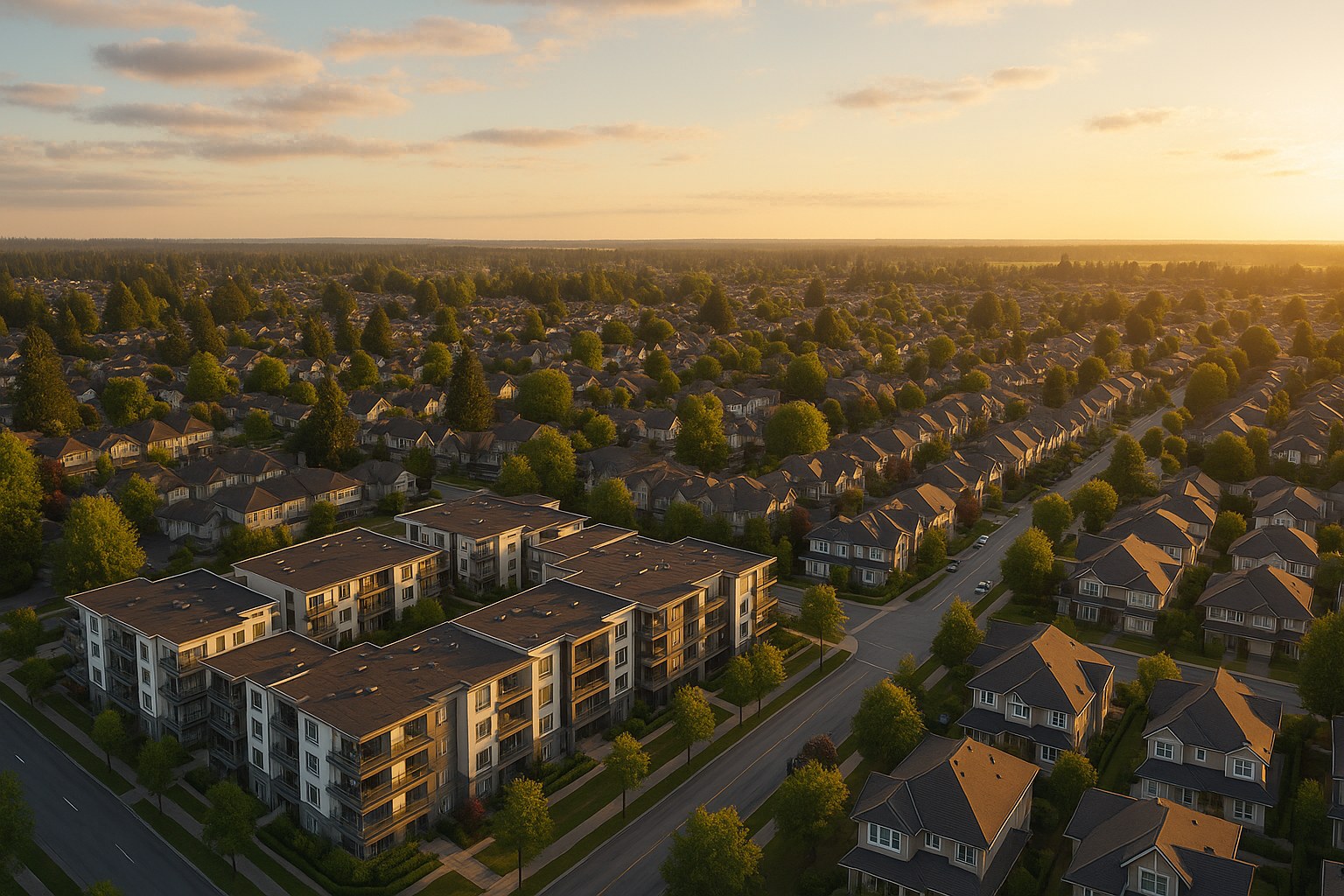
Surrey's low-lying lands sit near the Fraser River, the Serpentine and Nicomekl Rivers, Campbell River, and Mud Bay. Common flood-influence pockets include Bridgeview, parts of South Surrey near the Nicomekl, and stretches of low-lying coastal land. On a sunny day they look peaceful. When heavy rain, high tides, or storm surge hit, water finds the lowest entry point.
Five things to do before removing subjects:
- Check the City of Surrey COSMOS GIS flood plain + hazard layers.
- Confirm property elevation against the flood construction level with a surveyor.
- Look for sump pumps, backflow valves, raised electrical panels, and proper grading.
- Ask sellers about past flooding; look for patched drywall, musty crawl spaces, or replaced drywall lines on framing.
- Loop your insurance broker in early. Premiums and deductibles vary block by block; some lots are uninsurable for overland water at any price.
Mitigation costs run $2,000 to $5,000 for small upgrades, $10,000 to $20,000 for drainage improvements, and $50,000+ for full elevation or comprehensive flood-proofing. The silver lining: flood-fringe homes with the right upgrades often trade at a meaningful discount, which translates to more square footage or a bigger lot for the same money if you do the homework.
2. ALR-Adjacent Properties
Surrey's Agricultural Land Reserve runs primarily through Cloverdale, South Surrey, and Port Kells. ALR-adjacent homes get the open sky, fewer tall buildings, and semi-rural feel that many buyers love. They also share the realities of working farms next door.
Daily realities to expect: tractors and equipment starting before sunrise, sprayers + irrigation running on weather schedules, livestock odours and flies, dust drifting in dry summers, harvest-season truck traffic on rural roads. Right-to-Farm rules in BC protect normal agricultural activity, so you generally won't have grounds for nuisance complaints about typical farm operations.
How to assess fit:
- Confirm the zoning on the provincial ALR map.
- Identify the specific farm operations within line-of-sight: a berry field, a greenhouse, and a dairy operation each carry very different impacts.
- Visit the property at multiple times of year before committing.
- Review municipal records for any historical nuisance complaints.
For the right buyer, ALR-adjacent properties offer that country feel without leaving the city, often at a lower price than comparable homes a few blocks away. The trade-off is real, not theoretical: confirm yours before you remove subjects.
3. Pre-1999 Leaky-Condo Era Buildings
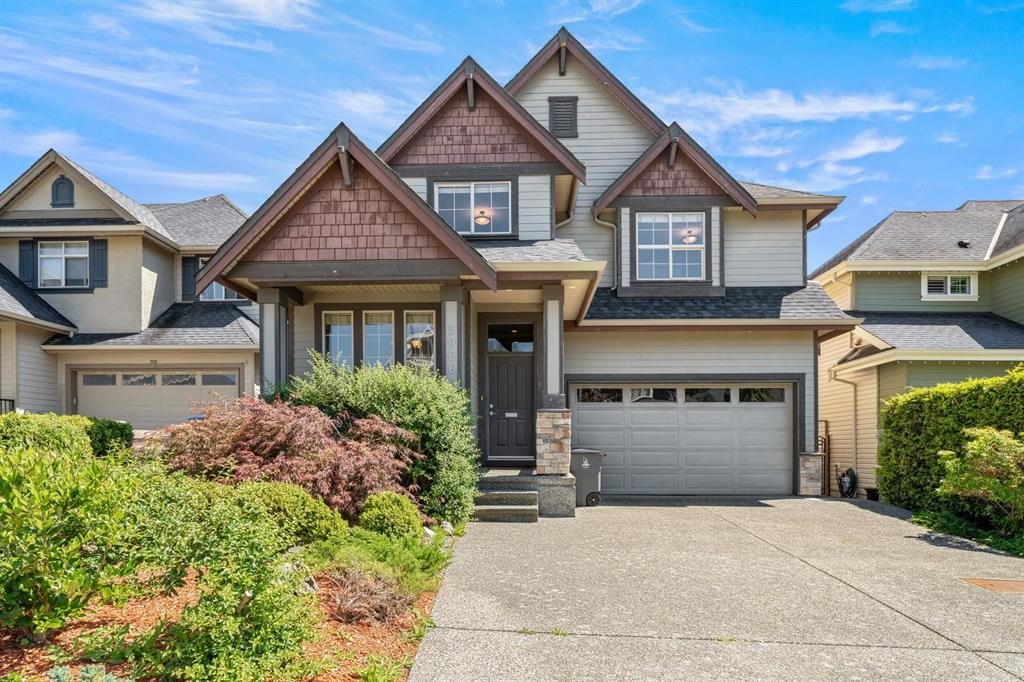
If you're shopping condos or townhomes in Newton, Guildford, Whalley, or older pockets of Fleetwood, you'll encounter pre-1999 wood-frame product. The core issue: inadequate rain screening and moisture management. Wind-driven rain meets a wall design with no drainage plane, water enters the assembly, rot and structural degradation follow.
The fix is comprehensive rainscreen remediation directed by a building-envelope engineer, not a patch job. As a buyer, you need:
- A current depreciation report.
- A full history of envelope remediation projects.
- Warranty documentation if remediation is complete.
- Contingency reserve fund balance vs depreciation-report funding model.
- Insurance certificate (some carry punishing water-damage deductibles).
FINANCING NOTE
Many leaky-condo era buildings are flagged by lenders. Even if you're paying cash, always include a financing condition in your offer. Why: when YOU sell, your buyer will likely need a mortgage, and a building lenders dislike means a smaller buyer pool and a softer resale price.
Unremediated buildings with weak reserves are high-risk. Fully remediated buildings with healthy funds are often excellent value: a corrected asset at a discount to brand-new construction.
4. Former Grow-Ops + Drug-Affected Properties
These need a different lens. Cosmetic renovation can hide the real issues: moisture from cultivation, unpermitted ventilation, makeshift electrical, hidden mould, compromised wiring, altered structural elements. Lenders and insurers are extremely cautious; many will refuse without proof of complete remediation.
Buyer protection is documentation. At a minimum:
- Municipal clearance letter confirming the city recognizes the property as safe.
- Environmental site assessment for soil + air contamination.
- Independent air-quality testing for residual mould or toxins.
- Confirmation that electrical, plumbing, and HVAC were brought back to code by licensed pros, not patched.
Without that paperwork: pass. With it (and lender + insurer acceptance in writing), the price discount can be meaningful. The rule is paperwork or pass. Never trust appearances.
5. Self-Managed + Underfunded Stratas
A strata is essentially a shared business. If that business doesn't have enough cash flow, you (the owner) end up footing the bill through special levies. The scariest combination is a self-managed strata that's underfunding its reserve and behind on its depreciation report.
The non-negotiable document set:
- Form B: snapshot of the unit + current strata financial state.
- Depreciation report: 30-year capital plan + funding model. Compare contributions against the model.
- Two years of council + AGM minutes: are repairs being deferred? Are special levies being issued repeatedly?
- Insurance certificate: high water-damage deductibles transfer real risk to owners.
- Contingency Reserve Fund balance: how does it compare to upcoming projects in the depreciation report?
Surprise levies of $10,000 to $30,000 for routine items, or six figures for envelope remediation, are the cost of skipping this homework. A self-managed strata that's organized + transparent can actually be cheaper to live in. The discipline + accountability of the council are what separate the two.
6. Busy Roads, Rail, SkyTrain Corridor
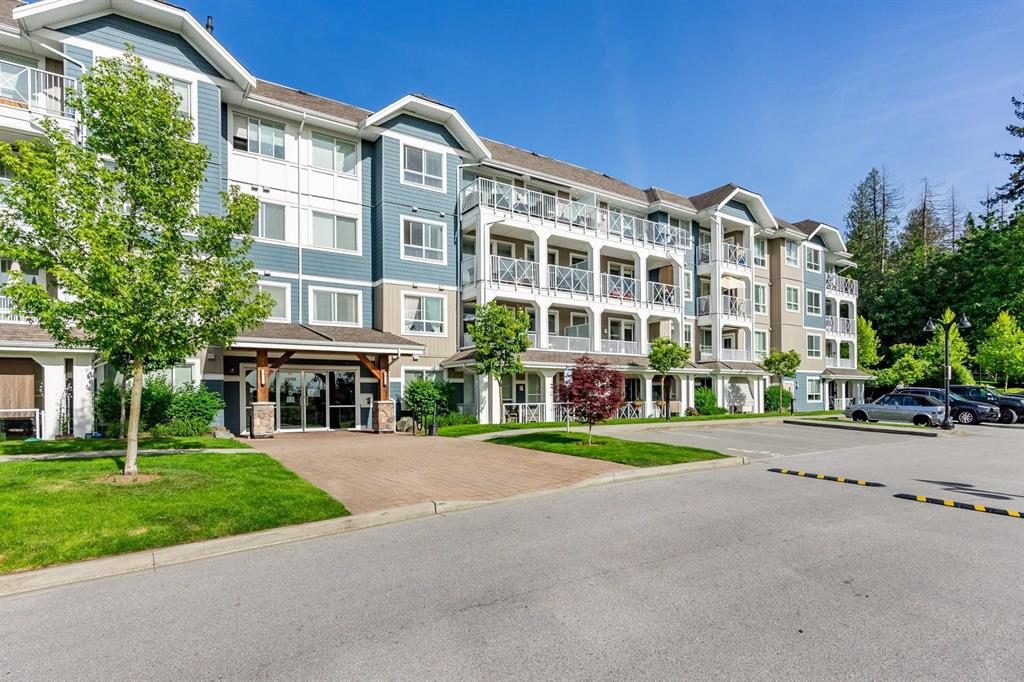
Surrey homes near Highway 1, King George Boulevard, or the expanding Surrey-Langley SkyTrain corridor often come with lower prices and faster commuting. They also come with daily realities that aren't obvious during a 20-minute showing: noise, vibration, air quality, and a smaller resale buyer pool because many online buyers filter these out before viewing.
Before you remove subjects:
- Visit the property at multiple times: morning rush, evening rush, late evening, weekends.
- Check whether the home has noise mitigation: upgraded windows, sound-rated insulation, perimeter fencing.
- Ask the city about planned sound-barrier projects for the corridor.
- Walk the block at night: vibration is often worse than noise and harder to retrofit out.
Mitigation upgrades range from a few thousand for new windows to tens of thousands for comprehensive treatment. Done right, a corridor-adjacent home with full mitigation can deliver real value, especially as transit + city infrastructure projects upgrade traffic patterns over time.
7. Legal Title Notations + Easements
Easements, restrictive covenants, and statutory rights of way are common across Surrey. Most are routine. The expensive ones are the covenants that quietly limit how YOU can use the property:
- Easements: may grant a neighbour or utility company access to part of your yard, affecting privacy + landscaping.
- Restrictive covenants: may block secondary suites, secondary parking pads, fence styles, exterior finishes, or tree removal.
- Statutory rights of way: may prevent garage, addition, or pool placement in the exact spot you wanted.
The risk isn't inconvenience: it's spending thousands on permit + design only to discover your plan is impossible. Always pull the title and order the supporting documents during the subjects period, then have a real estate lawyer translate them in plain English. With my Surrey buyer clients, I review the title package every time, before the offer goes in if possible.
Many notations are routine. The key is identifying the rare critical ones that clash with YOUR specific plan, so you can avoid the purchase, negotiate accordingly, or adjust your plan early.
8. Riparian, Steep Slopes, Geotech
Some of the most beautiful Surrey lots come with rules and engineering costs that conventional properties don't. Streamside setbacks protect fish habitat and water quality, which means a portion of your lot may be off-limits for building or even landscaping. Steep slopes and engineered fill change where + how a foundation can sit.
What to expect:
- Geotechnical reports: $10,000 to $50,000+ depending on lot complexity. Often required before the city issues building permits.
- Environmental assessments: required where streamside or riparian protection applies.
- Smaller buildable envelope: the visible lot size is not the buildable lot size. Always confirm the developable footprint.
- Tree removal + grade changes: restricted in protected areas, requiring additional permits + arborist reports.
Done right, these properties deliver privacy, natural beauty, and long-term desirability that flat suburban infill simply can't match. The buyers who win here line up the engineering early, price the constraints honestly, and don't assume the visible lot equals the usable lot.
The 7-Step Surrey Buyer Playbook
Use this every time you tour a Surrey property:
- Map the address against the City of Surrey COSMOS flood + hazard overlays. Establish the baseline risk.
- Pull the title and order the supporting documents. Have a real estate lawyer translate them.
- Evaluate transportation noise at multiple times of day. Confirm any mitigation in place.
- For stratas: read Form B, depreciation report, two years of minutes, insurance certificate.
- If you suspect prior drug use or see heavy cosmetic renovation: verify permit history + ask for environmental clearance documents BEFORE the subject removal date.
- For sloped or riparian-area lots: line up environmental + geotechnical guidance early, not after the offer.
- For ALR-adjacent: talk to neighbours, walk the area at multiple times of year, understand the actual farm operations.
Surrey is a big city of micro-markets. Two blocks can behave differently. Buyers who win here don't guess: they gather facts, bring in the right experts, and price the trade-offs into their offer.
Some of the riskiest Surrey homes are the ones that photograph best. Surrey Homes to Avoid: 8 Types That Look Great on Paper covers 8 different property types.
Frequently Asked Questions
Can I still get insurance on a Surrey flood-plain home?
Usually yes, but premiums and deductibles run higher and overland-water coverage may be excluded or capped. Always loop your insurance broker in BEFORE removing your subjects. Properties on the fringe of a flood plain with documented mitigation (sump pumps, backflow valves, raised electrical, flood construction level) are the most insurable. Properties deep inside a mapped flood zone with no mitigation can be uninsurable for water damage at any reasonable price.
Are pre-1999 leaky-condo buildings always a bad buy?
No. The unremediated buildings with weak reserve funds are the trap. A pre-1999 building that completed full envelope remediation under engineer direction, holds proper paperwork, and has a healthy contingency reserve fund can be excellent value: you're buying a corrected asset at a meaningful discount to brand-new construction. Always ask for the depreciation report, envelope remediation history, warranty docs, and insurance certificate. Also confirm financing: many lenders are more cautious here, which can shrink your future buyer pool.
How do I find out if a Surrey property was a former grow-op?
Three checks: (1) review BC Land Title, the property disclosure statement, and any property condition history with your REALTOR; (2) ask the listing agent in writing whether the property has been used to grow, manufacture, or process controlled substances; (3) request municipal clearance letters confirming the city recognizes the property is safe + remediated. Independent air-quality testing and an environmental site assessment are reasonable subjects to add when the disclosure is unclear. Without paperwork: pass.
What's the difference between an ALR home and an ALR-adjacent home?
An ALR (Agricultural Land Reserve) home sits ON ALR-zoned land: building, subdivision, and use are tightly restricted by provincial rules. ALR-adjacent means your property is next to ALR land but is not itself in the reserve. ALR-adjacent comes with the realities of working farms next door (early machinery, sprayers, dust, livestock noise, harvest truck traffic) under BC's Right to Farm rules. The price discount can be meaningful, but visit at multiple times of year before deciding.
Will a Surrey home near the future SkyTrain lose value?
Not on the corridor, on the wrong streets near the corridor. Properties within walking distance of a future station typically gain value into 2029 as the line opens, while properties directly on Fraser Highway or fronting the rail corridor face higher noise + vibration and a smaller buyer pool. Visit at rush hour and late evening before deciding. Mitigation (upgraded windows, sound-rated insulation, sound walls in the city plan) can soften the noise but not eliminate it.
What's the worst kind of strata to buy into?
Self-managed, underfunded, and behind on its depreciation report. The combination is what creates surprise special levies of $10,000 to $30,000+ per unit (or six figures on envelope remediation). Always read: Form B, the depreciation report, the most recent two years of council + AGM minutes, the insurance certificate, and the contingency reserve fund balance vs the depreciation report's funding model. A self-managed strata that's organized + transparent can actually be cheaper to live in. The trap is the disorganized one.
Do title notations always reduce price?
No. Most easements and statutory rights of way are routine (utility access, shared driveways, drainage corridors) and don't affect day-to-day living. The expensive ones are restrictive covenants that limit secondary suites, building footprints, height, finish, or tree removal. Always pull the title and order the supporting documents in your subjects period. Have a real estate lawyer translate them in plain English. The notations that clash with YOUR specific plan for the property are the only ones that matter to your offer.
Should I avoid all riparian-area properties in Surrey?
No. Streamside-protected lots can be some of the most beautiful and private sites in Surrey: protected greenery you keep forever, no neighbouring house behind you. The risks are: a smaller buildable envelope, mandatory geotechnical or environmental reports ($10,000 to $50,000+), restricted tree removal and grade changes, and slower permits. If your plan is to build new or expand significantly, line up the engineering early. If your plan is to enjoy the existing home as-is, the discount on these lots can be a quiet win.
Buying in Surrey?
Let's pressure-test the property before you write the offer.
Book a call. We'll walk through the address, the title, the strata, and any of the 8 categories above. I've helped over 30 years of clients move through Surrey: I know which streets, buildings, and pockets are worth the discount, and which ones aren't.

Alex Dunbar Personal Real Estate Corporation
REAL Broker BC Ltd. | Living in the Lower Mainland
Buying, selling or investing in Surrey and the surrounding cities? Whether you're new to the area or a longtime local, I'll help you make the right move. Book a 30-minute no-pressure call with me and we'll go over your goals, timeline and budget.
Featured Guides
This article is educational and not legal, environmental, or insurance advice. Verify property-specific risks with the City of Surrey, a real estate lawyer, a qualified building-envelope or geotechnical engineer, your insurance broker, and an independent home inspector before relying on any of the items above for a buying decision.
Categories
Recent Posts


GET MORE INFORMATION