
What Happened To Vancouver BC (2026): Why Buyers Are Choosing the Suburbs
By Alex Dunbar, REALTOR · REAL Broker BC Ltd. · Updated April 2026 · 8min read
Watch the breakdown above, or read the 2026 written analysis below.
Vancouver was once the city that had it all: ocean, mountains, vibrant cultural scene, walkable neighbourhoods, real proximity to nature. Over the last decade, that picture has shifted. Skyrocketing housing costs, rising visible crime + homelessness, worsening traffic, and a fading sense of livability have pushed more buyers + families to look elsewhere. The migration story is real: Surrey, Langley, Maple Ridge, and Abbotsford are absorbing the demand. Here's what changed + why the suburbs are winning the math.
AT A GLANCE
Vancouver vs the Suburbs: The 2026 Math
PRICE GAP
25 to 35%
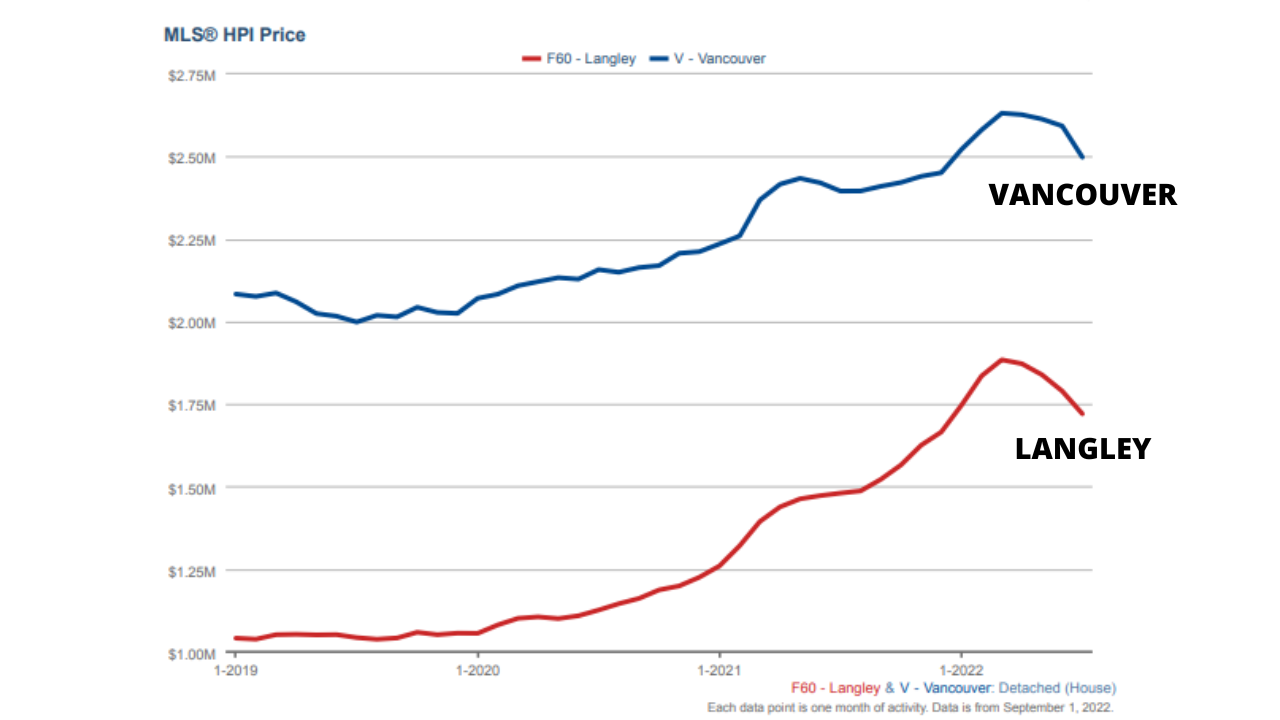
Detached + townhome + condo prices in Surrey or Langley vs equivalent product in Vancouver. The discount has held across cycles.
AVG VAN DETACHED
$2M+
Single-family detached starts here for entry-level product. Most buyers price out before reaching average.
COMMUTE TO VANCOUVER
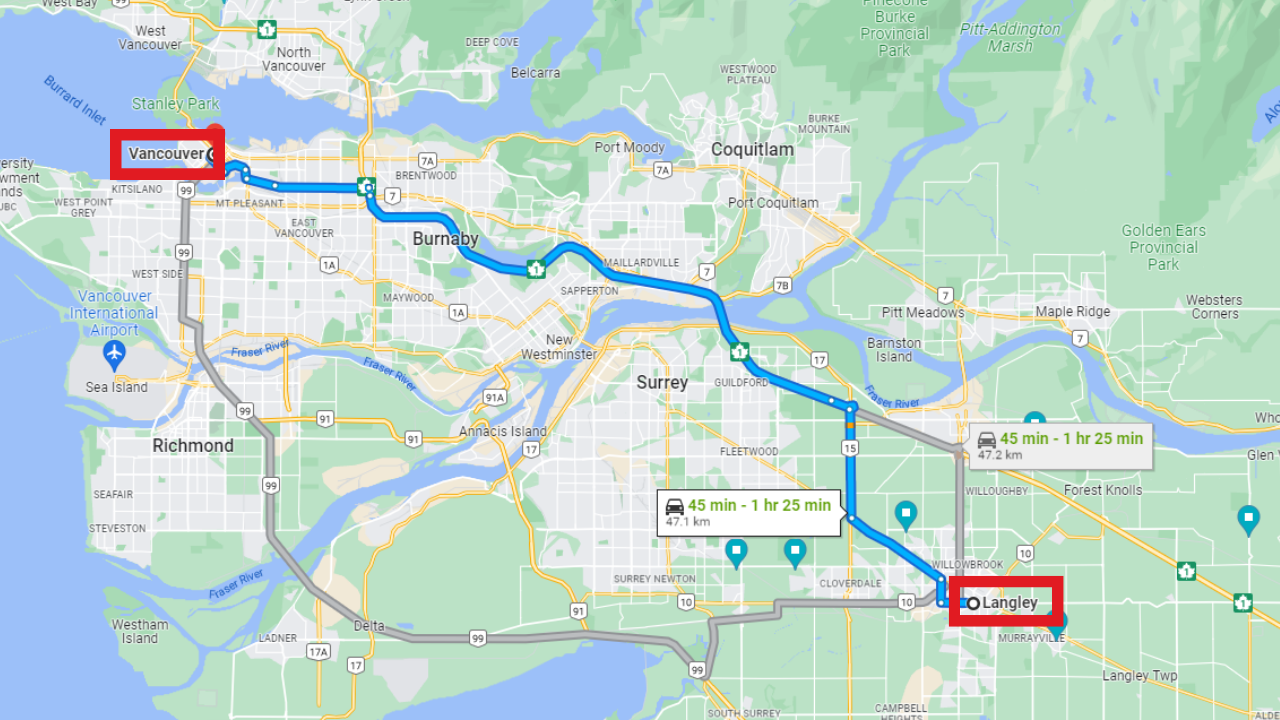
40 to 90 min
From Surrey or Langley by car. Off-peak: closer to 40. Friday rush: closer to 90.
Plug both a Vancouver + a suburb purchase price into the Mortgage Calculator, the gap in monthly payment is what drives most buyer decisions today.
In This Guide
Why Vancouver Buyers Are Choosing the Suburbs
The Cost of Living Trap
Vancouver has some of the highest real estate prices in North America. Single-family detached has crossed $2 million on average, putting home ownership out of reach for most working-age residents. Even one-bedroom condos sell for $700K+. One-bed rentals average $2,500+ per month. Wages have not kept up.
Beyond housing, daily life has gotten more expensive: groceries, gas, dining out, parking, transit fares. Even basic necessities feel like luxury upgrades. People who used to find Vancouver vibrant + full of opportunity now find themselves stretched thin just to keep up. The dream of owning a home inside Vancouver itself has become exactly that, a dream, for most buyers under 40.
Crime + Safety Shifts
Vancouver has always had some level of crime. What's changed is the visibility + spread of street-level issues. Reported breakins, drug-related incidents, and violent crime have all increased in concentration in the downtown core. The Downtown East Side has long been the most-cited area, and visible homelessness + open drug use have spread beyond it (notably along Hastings Street, where the previously-condensed pocket has expanded).
For families weighing schools, daily errands, and walking around at night, the perceived shift in safety drives behaviour even where the statistics are mixed. Many longtime residents who could afford to stay are choosing not to, and that's a major part of the suburb-migration story.
Traffic + Transit Friction
Congestion has worsened. Commutes are longer than ever before. Vancouver has prioritized bike lane + transit expansion, which is good urban policy long-term, but the road infrastructure for car-dependent residents hasn't kept up. Parking is expensive + limited. Bridge bottlenecks are a daily reality. People are spending hours stuck in traffic just to get in + out of the city.
For those who can't arrange their lives around transit + a bike, the daily friction stacks up. The Surrey-Langley SkyTrain extension (opening 2029) will help, but it's the suburbs benefiting most from that infrastructure, not Vancouver itself.
The Missing Middle Problem
Vancouver has plenty of high-rise condos + plenty of detached homes, but very few townhomes + duplexes + low-rise multi-family options in between. This "missing middle" is structural:
- Geography: Vancouver is landlocked, surrounded by ocean + mountains + the US border. Very little undeveloped land remains; the city builds up rather than out.
- Economics: when land is this expensive, developers maximize unit count. A high-rise puts more units on a lot than a townhome row, so the math favours density when it's allowed.
- Zoning: historic single-family zoning across much of Vancouver has only recently begun shifting toward multi-family allowance, and the shift is slow.
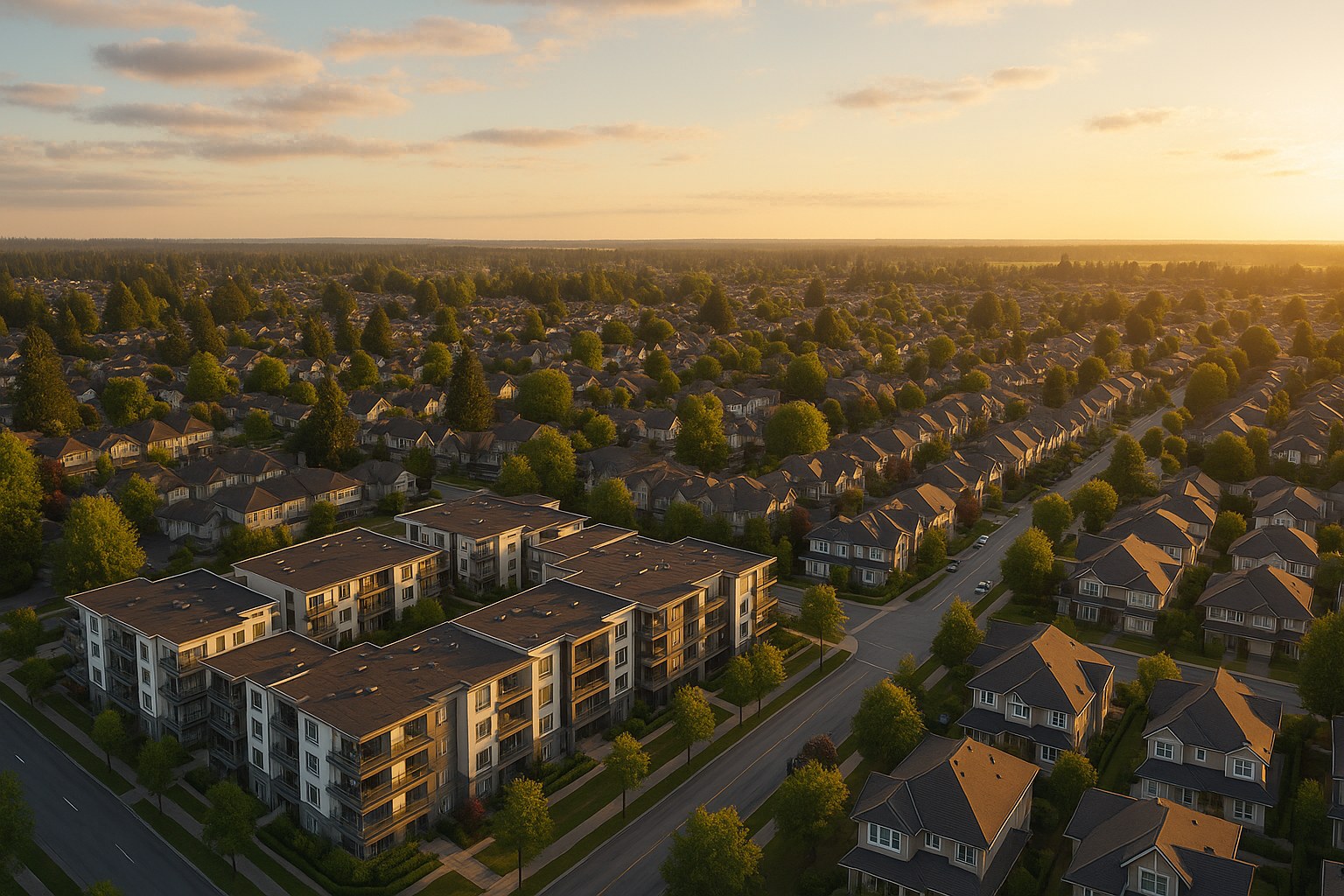
The suburbs (Surrey, Langley, Maple Ridge, Abbotsford) still have land + zoning flexibility to deliver this missing-middle product. Townhome rows are increasingly the default starter home for Fraser Valley families, replacing the detached-home expectation that defined an earlier generation.
Why the Suburbs Are Winning
Each Fraser Valley suburb plays a slightly different role in absorbing Vancouver demand:
- Surrey: the regional hub, with new developments, a growing business sector, existing SkyTrain access, and the upcoming UBC Surrey campus + Langley extension. Most economic + amenity growth happening in any Lower Mainland city right now.
- Langley: a strong urban-rural mix, new townhome neighbourhoods + acreage pockets, growing commercial + dining scene, SkyTrain by 2029. Best for families who want neighbourhood character + space without leaving the urban radius.
- Abbotsford: quieter family atmosphere + good public schools + larger lots, deeper into the Fraser Valley.
- Maple Ridge: stunning natural surroundings + the most accessible price point, for buyers willing to absorb a longer commute.
The honest math: detached homes in Surrey or Langley are 25 to 35% below Vancouver-equivalent product. Maple Ridge + Abbotsford push that gap further. Rentals follow the same pattern. The remote + hybrid work shift made these commutes feasible for buyers whose employers used to require daily Vancouver presence.
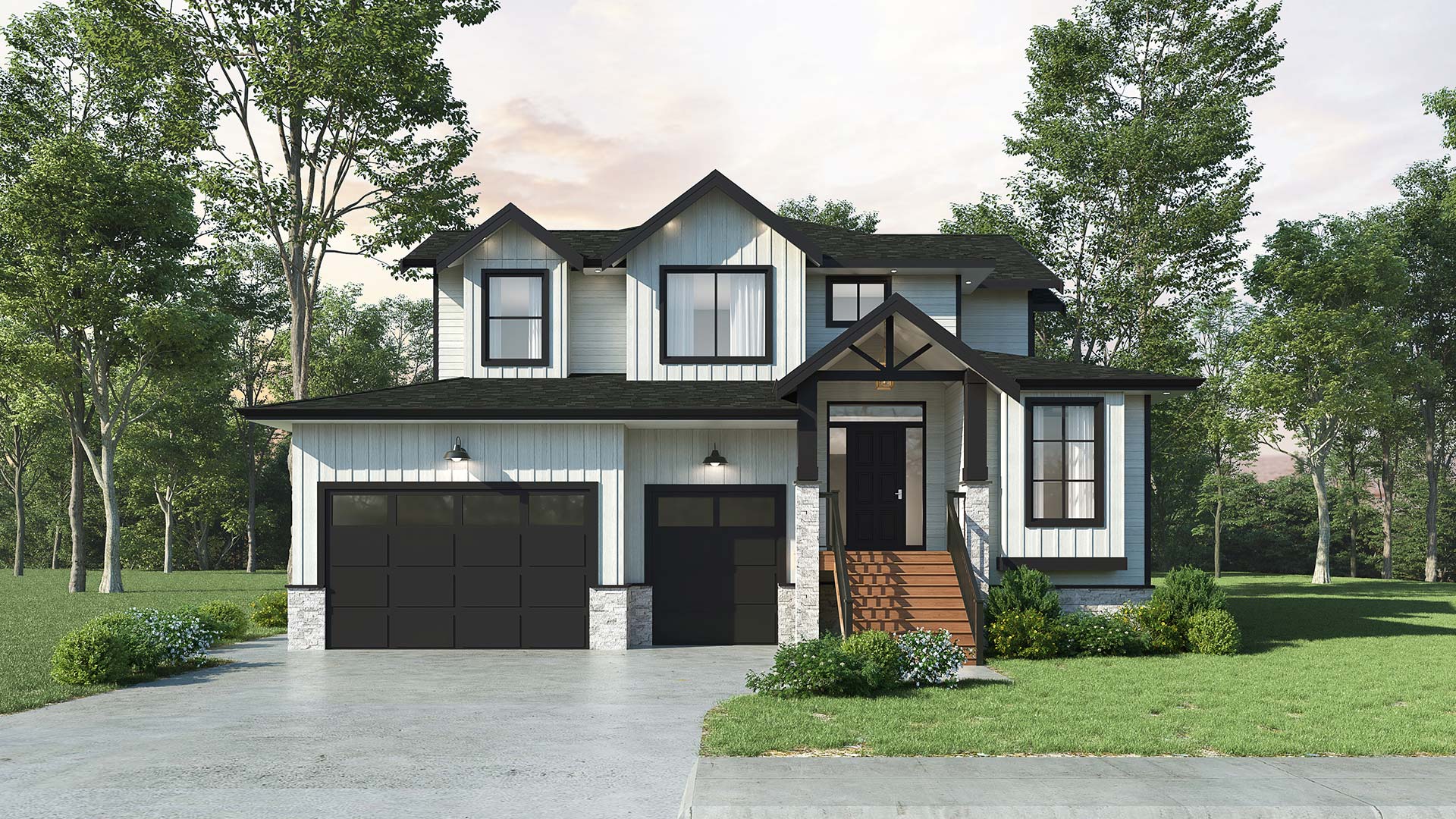
Most buyers I work with are running this calculation: "Do I want a 600-square-foot one-bedroom in Vancouver, or a 1,500-square-foot townhome in Surrey or Langley with an extra bedroom + a yard for the dog?" When you frame it like that, the suburbs win on lifestyle, not just price.
The Future of Vancouver
Vancouver still has its beauty + appeal. The mountain + ocean access, the cultural scene, the food + arts + walkable neighbourhood pockets that survived the affordability crisis are real, and for some buyers + lifestyles, they justify the premium. The city isn't hollow.
The open question is whether Vancouver will address the affordability + safety + transit issues fast enough to keep middle-income residents. Recent zoning reform + missing-middle policy signals are real but slow. The suburbs aren't slowing down their growth waiting for Vancouver to catch up.
For most buyers under 40 in 2026, the practical answer is: shop the suburbs first, then decide whether anything in Vancouver justifies the premium for your specific situation. That's the conversation I have with buyers on a call, what does the math look like, and what trade-offs actually fit your life.
Frequently Asked Questions
Is Vancouver actually losing residents?
Vancouver itself is still growing in absolute terms (the Lower Mainland keeps adding people overall), but the surrounding suburbs are growing meaningfully faster. More buyers + young families are choosing Surrey, Langley, Maple Ridge, and Abbotsford as their first home, in part because the math no longer works inside Vancouver. The population mix is shifting suburb-ward.
How much cheaper are the suburbs vs Vancouver?
Detached homes in Surrey or Langley typically run 25 to 35% below equivalent Vancouver pricing for the same square footage + age. Maple Ridge + Abbotsford push that gap further. Rental prices follow the same pattern. The size of the discount has held remarkably consistent through the past few rate cycles.
Why doesn't Vancouver have more townhomes + duplexes?
Two big reasons. First, geography: Vancouver is landlocked, surrounded by water + mountains on three sides + the US on the fourth, so there's very little undeveloped land. Second, economics: when the cost of land is high, developers maximize unit count by building up (high-rise condos), not out (townhomes + duplexes). The "missing middle" gap is structural, not a planning oversight.
Has Vancouver always been this expensive?
No. Vancouver's real estate prices started outpacing local incomes in the mid-2000s + accelerated through the 2010s. The shift from "expensive but doable for working professionals" to "investment playground" is recent + measurable. Wages have not kept up, which is the core driver of the affordability crisis vs. earlier decades.
Are crime + safety in Vancouver actually getting worse?
Reported issues such as breakins, drug-related incidents, and visible street disorder have increased in concentration + visibility, particularly in the downtown core + Downtown East Side. Whether overall crime is "worse" depends on how you cut the data, but the lived experience for many residents (especially walking downtown at night or running family errands) has shifted. The perception drives behaviour even where statistics are mixed.
Will the suburbs stay this much cheaper?
Probably yes for the foreseeable future, though the gap will narrow in select pockets. SkyTrain extensions (Surrey-Langley by 2029) + UBC Surrey + ongoing densification will push some suburb prices up faster than the Vancouver baseline. The structural geographic constraint on Vancouver supply will keep the inner-city premium real even as suburb pricing rises.
What's the real Vancouver-to-suburbs commute look like?
40 to 60 minutes from most of Surrey or Langley to downtown Vancouver under typical conditions, depending on entry point + time of day. Friday rush hour can stretch it to 90+ minutes. SkyTrain access (currently to Surrey, Langley by 2029) bypasses traffic but adds transfers + walking time at both ends. Remote + hybrid work has done more to make these commutes manageable than any infrastructure change.
Should I still buy in Vancouver in 2026?
Depends on your situation. If you need the urban density, the proximity to specific employers + amenities, or you place high value on the unique aspects of inner-city Vancouver, the price is the price. If you're a first-time buyer + can work fully or partly remotely, the suburbs almost always deliver more space + more property type options for the dollar, with the trade-off of less walkability + a slower transit ramp. Run your own numbers in the Mortgage Calculator first.
Considering moving from Vancouver?
Let's figure out which Fraser Valley suburb actually fits your life.
Book a call. We'll go through your priorities (commute, schools, lot size, character, budget) and match them to Surrey, Langley, Maple Ridge, or Abbotsford, plus when staying in Vancouver actually makes sense. Or run the affordability math first with the Mortgage Calculator + grab the relocation guides.

Alex Dunbar Personal Real Estate Corporation
REAL Broker BC Ltd. | Living in the Lower Mainland
Buying, selling or investing in the Lower Mainland? Whether you're new to the area or a longtime local, I'll help you make the right move. Book a 30-minute no-pressure call with me and we'll figure out what works best for you.
Featured Guides
Pricing, commute times, and city conditions evolve. Numbers + descriptions reflect 2026 conditions in Vancouver + the broader Lower Mainland. Verify with your REALTOR before relying on these as the basis for an offer.
Categories
Recent Posts



GET MORE INFORMATION